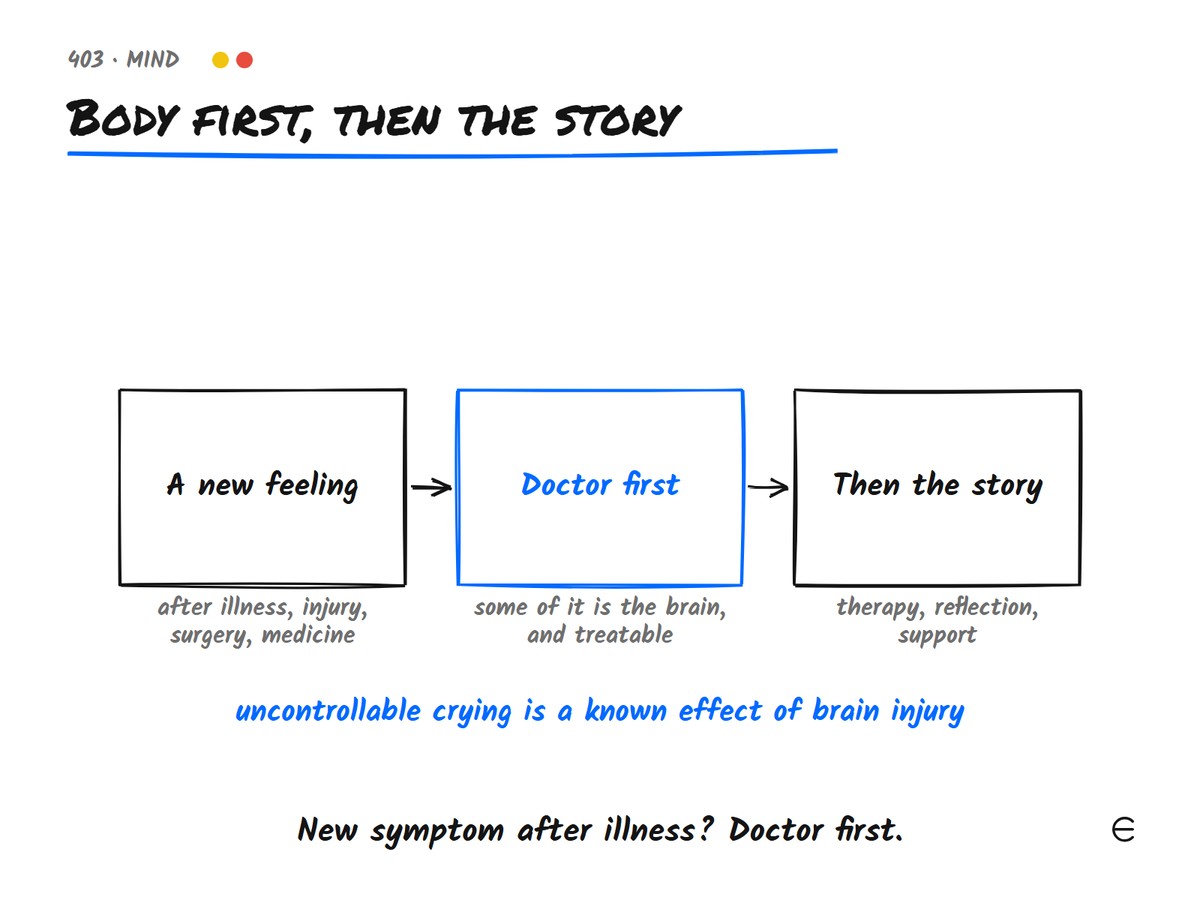
A new emotional symptom after an illness, head injury, surgery or new medicine (crying you can't stop, sudden anger, a flat mood) goes to the doctor first. Some of it is the brain or body itself, and it can be treated. Story and childhood work can come after that check, not instead of it.
P Evidence: promising. Good studies, but small or few. Use it and keep checking.
C Evidence: contested. The research disagrees. Named, so you can stop worrying about it.
Sources
Uncontrollable crying or laughing (pseudobulbar affect) occurs after brain injury, stroke and brain tumours, is often mistaken for depression, and responds to medication (Ahmed & Simmons 2013, review, 🟡) · reading crying after brain surgery as stored childhood trauma, and a tumour as "symbolic": Peter Crone (🔴) · see 380.
Not medical, legal or financial advice.