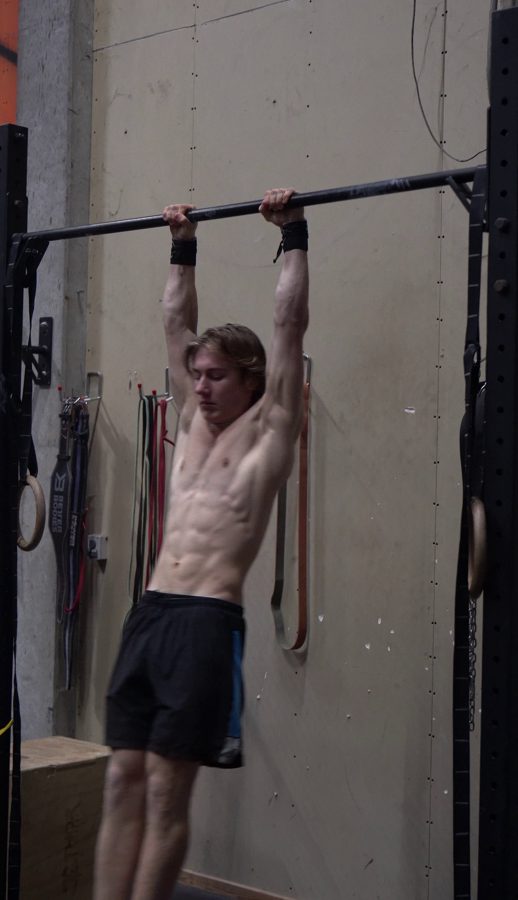
Active hang
Hang with straight arms, then pull the shoulders down away from the ears without bending the elbows. The start of every pull.
Calisthenics Reacts · Exercises
87 exercises and methods from the eight guides, in plain words, with Ole's own photos where he's shown doing them. Met a name in your plan or a swap table? It's here. The guides show each one properly, with pictures and the cues.
Hang with straight arms, then pull the shoulders down away from the ears without bending the elbows. The start of every pull.
A tuck front lever with the back flat and the hips opened until the thighs are at right angles to the body, knees bent. The rung coaches call the most important.
Lying face down, chest and legs lifted, glutes squeezed. Rocking in it is arch rocks. The back half of the swing.
A wide pull-up where you pull toward one hand while the other arm stays nearly straight. One arm does most of the work: a step toward the one-arm pull-up.
A wide push-up where you lower toward one hand while the other arm stays straight. Most of the load goes on one arm.
Hanging face down below the bar, body straight and level, arms locked behind you. Built from the German hang up.
A muscle-up with a band looped over the bar under the knees or feet, taking part of the weight. Practises the whole movement while the strength builds.
Holding the lowest point of a movement still, for a count: the head just off the floor in a handstand push-up, the shoulder below the elbow in a dip.
A split squat with the back foot on a bench behind you. Lower the back knee toward the floor, stand up through the front foot.
A pull-up high enough that the chest touches the bar. The pull a muscle-up needs.
A pull-up with the palms facing you. A little easier on most elbows, the same job.
A push-up pressed hard enough to leave the floor and clap before landing. Land soft, elbows slightly bent.
A set broken into small groups with a short rest between: clusters of 2 means two reps, rest, two reps. More quality reps at a hard load.
Pulling straight legs up toward the chest with the front of the hips and the abs. What the L-sit and V-sit actually need.
Hanging from the bar with straight arms. Passive: shoulders relaxed up by the ears. Every strict pull-up starts here.
Stopping a swing on the bar without touching the floor, by tightening the body at the right moment. The first safety skill on a high bar.
A handstand push-up on parallettes, so the head can go lower than the hands. More range, more strength.
On parallel bars, arms locked, lower until the shoulder is below the elbow, then push back up. Shoulders down the whole way.
Leaving the bar on purpose and landing on your feet, from a swing. Learned before any release.
Lying on a bench holding it behind your head, the body lifted straight from the shoulders. The negative lowers slowly. Trains the front lever's body line.
Balancing the body level on the hands, elbows pressed into the hips. A balance more than a strength hold.
Every minute on the minute: start a set at the top of each minute, rest whatever is left. The clock sets the pace.
A push-up with the hands on a bench, pushed as fast as you can, often until the hands leave it. The first step to the clap push-up.
Jumping in place with a half, full or one-and-a-half turn, arms in tight, landing still. Air sense for releases, without a bar.
A tuck planche with the knees wide, outside the arms, not resting on them. The rung between the tuck and the straddle.
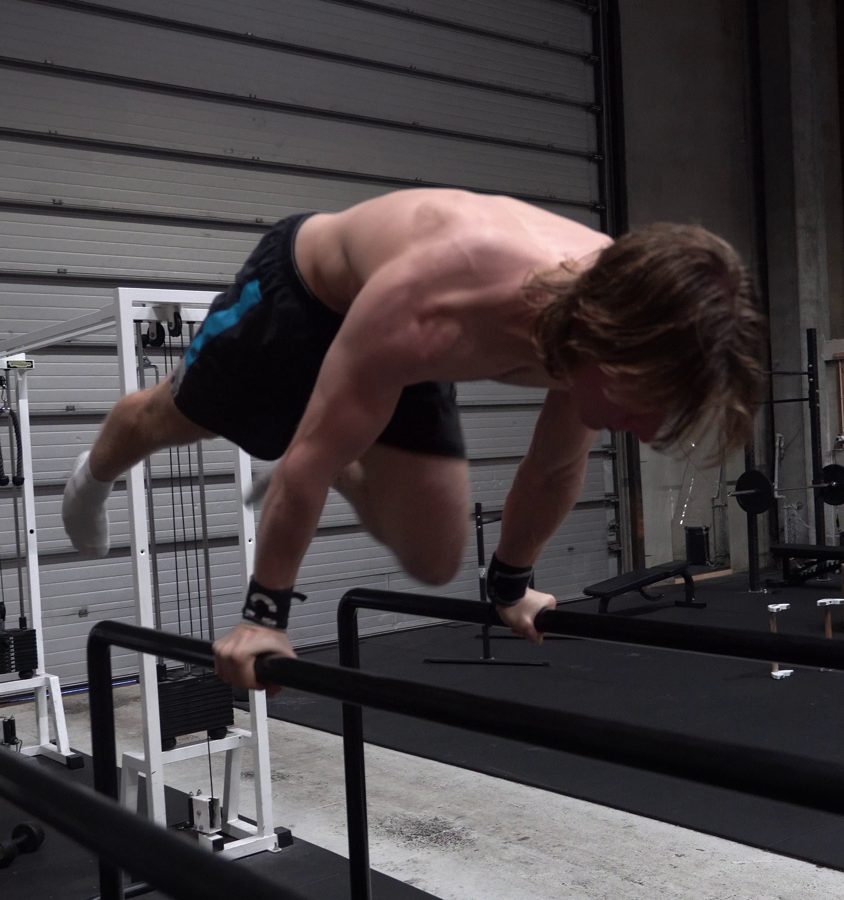
Balancing on the hands with the knees resting on the backs of the elbows, feet off the floor. A balance, not a planche, and the first time the hands carry you.
Hanging face up below the bar, body straight and level, arms locked. Built through tuck, advanced tuck, straddle and half lay.
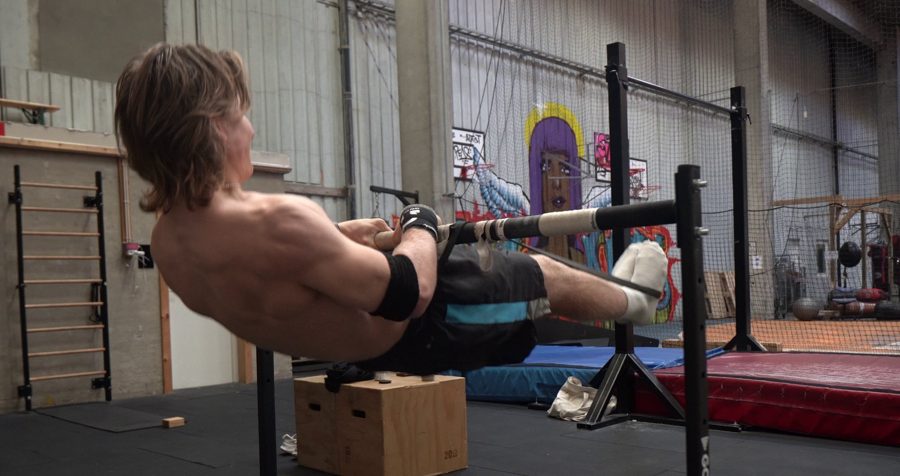
From a hang, arms locked, lift the body up to the lever and lower back down. Builds the lever moving instead of holding.
From a hang, pass the legs through the arms and let the shoulders open behind you, feet on the floor at first. The range the back lever needs.
The kip's first part: a long swing forward under the bar with the body straight and the feet low.
A few easy sets spread through the day, at about half your best, never near failure. Practice for the nervous system, not a workout.
A front lever with the hips open in line with the body and the knees bent at a right angle. The rung after the advanced tuck, with the full lever's hip position.
The pull and the turn of a muscle-up without the dip: pull high, roll the wrists over, chest over the bar, then lower. The hardest part on its own.
On the swing, letting go with one hand at a time and regripping. The first release skill.
From a handstand, lower until the head lands in front of the hands, then press back up. Against the wall first, freestanding later.
From a dead hang, lift straight legs (or bent knees, easier) toward the bar without swinging. Compression, hanging.
A pull-up as fast and high as possible, aiming the bar at the chest or lower. The power behind the muscle-up.
Lying face up, lower back pressed into the floor, arms and legs lifted long. Rocking in it is hollow rocks. The body shape of every static and swing.
From the top of a pull-up, push the bar away with straight arms into a front lever, then pull back. Both ends of the front lever pull-up.
Kicking up into a handstand from a lunge, one leg after the other, against the wall or free. Ten clean ones beat one long fight.
Getting from a hang to support on top of the bar with a glide, a fast toes-to-bar and a pull up the legs. Swing, not strength.
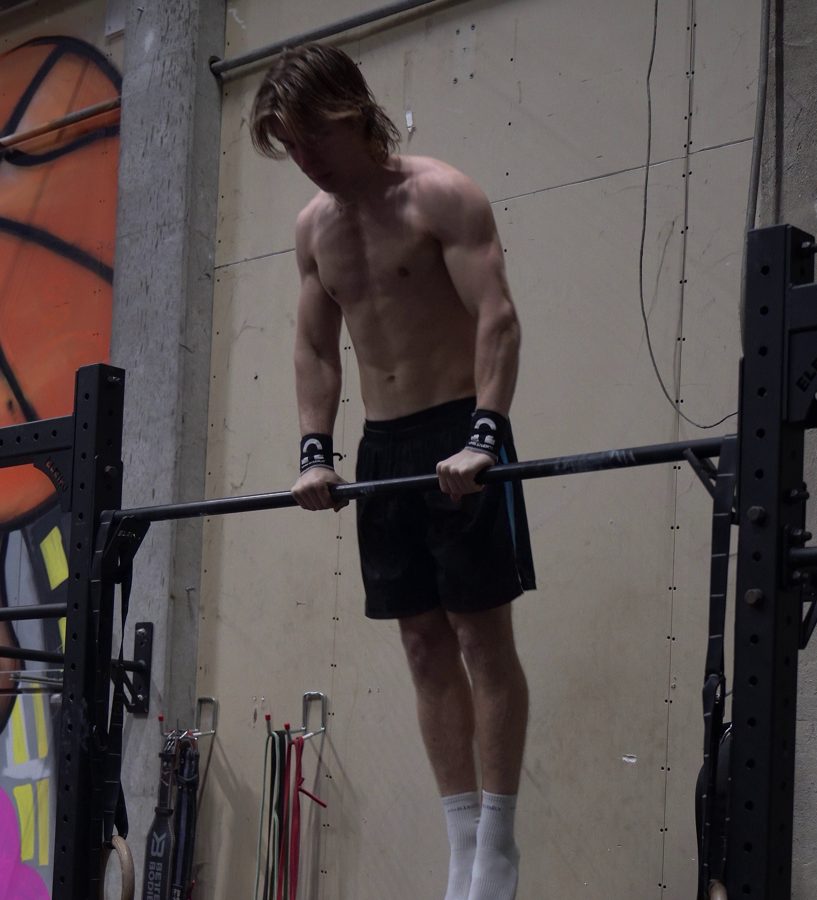
Sitting on straight arms, legs straight and level in front, hips off the floor or the bars. Shoulders down.
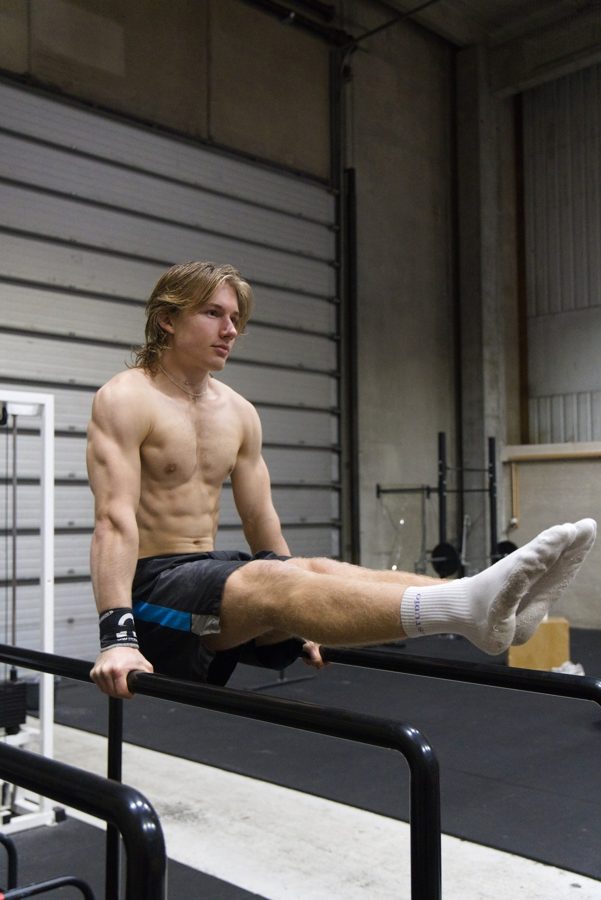
On a bar at chest height, feet on the floor, practising the turn from the pull to the dip over the bar. The muscle-up's hardest moment, made safe.
From a hang, pull high, turn the wrists over the bar and push to support on top. Strict means no kip and no swing.
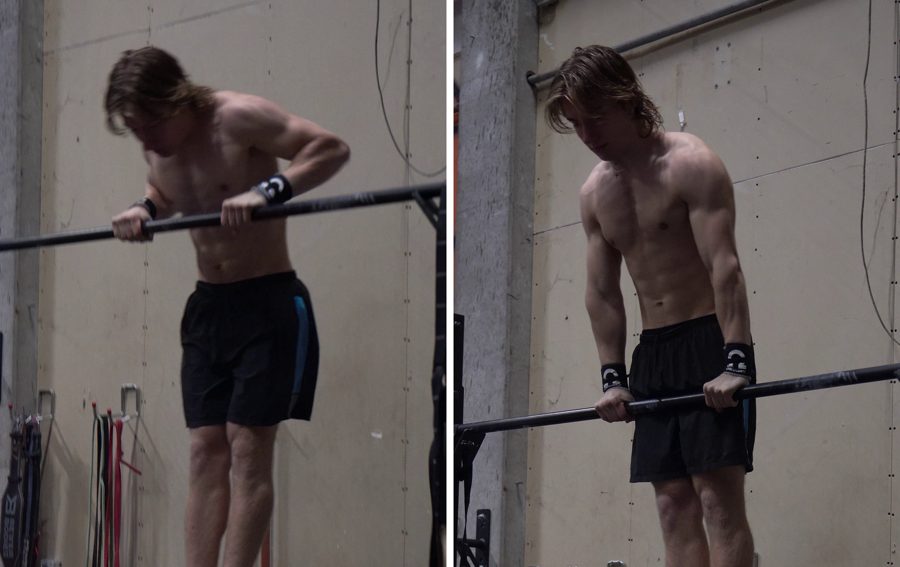
Starting at the top of a movement and lowering slowly for a count: a 5-second negative takes five seconds down. Builds the strength before the full rep.
A rep with a still stop, usually at the bottom or in the start position. Takes the bounce out.
From the bottom of a pike push-up, walk the feet in and lean until they lift. Teaches where the weight must be for a handstand push-up.
Hips high, body in an upside-down V, lower the head toward the floor in front of the hands and press back. The handstand push-up's path, on the floor.
A one-leg squat, sitting down to a box behind you, the other leg held in front. Harder than squats without a load.
Balancing the body level above the floor on straight arms, shoulders far past the hands. Built through tuck, frog, straddle and full.
Push-up position, arms locked, leaning the shoulders forward past the hands while pushing down and forward into the floor or bar. The base of the planche.
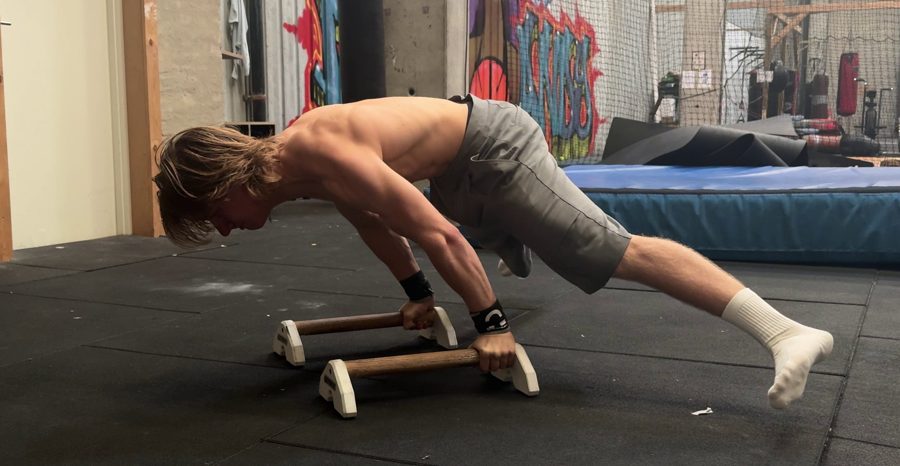
A push-up pressed hard enough to leave the floor. Speed, not reps.
A push-up with the hands turned out or back, beside the hips, and the shoulders kept far past the hands through every rep. The bent-arm partner of the planche.
From a dead hang, pull until the chin is clearly over the bar, then lower all the way to straight arms. No kick, no swing.
Hands no wider than slightly outside the shoulders, body one straight board from head to heels. Lower until the shoulders pass the elbows, then press to locked arms.
How many more reps you could have done when you stopped the set. '8 pull-ups, 2 left' means you stopped two short of failure.
A push-up with the hands on rings set just off the floor. The rings move, so the shoulders work harder.
Under a bar or rings at waist height, body straight, heels on the floor, pulling the chest to the bar. Feet raised is harder.
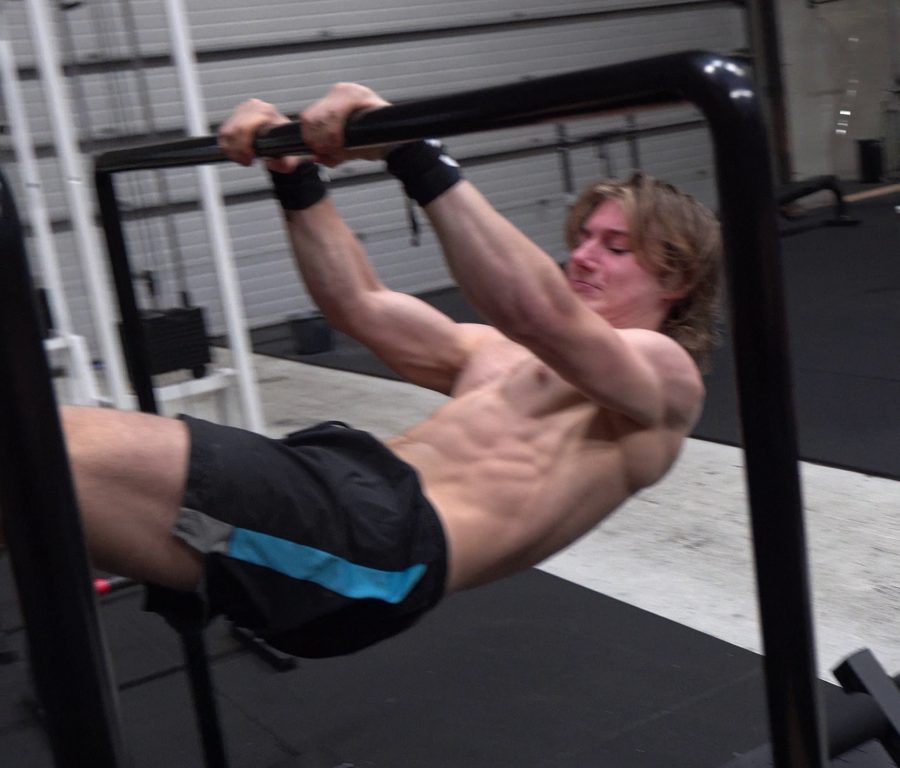
From the bottom of a dip, take the elbows back until the forearms rest along the bar, then return to the dip and push up. The elbow path of the muscle-up's turn.
From the forearms, body hollow, drive the shoulders forward over the hands and press up to straight arms. Teaches the fast handover from pull to press.
From a dead hang, pull the shoulders down without bending the arms, then let them back up. The first rung of the pull-up.
In a push-up position with the arms locked, let the shoulder blades come together, then push the floor away until they spread. Shoulder prep for every push.
Sitting with straight legs, hands on the floor beside the knees, lifting both heels off the floor. Compression on its own.
A grip with the heel of the hand slightly over the bar and the wrist a little bent. Allowed in the Calisthenics Cup's endurance tests, where a full false grip isn't.
In a handstand against the wall, lift one hand to touch the opposite shoulder, then the other. One arm for a moment: shoulder stability and the start of balance.
A one-leg squat holding the other foot behind you, lowering until the back knee touches the floor or a box.
From a hang, tuck and pass the legs through the arms to a German hang, and back the same way, slowly. Range for the back lever.
A squat with one foot forward and one back, lowering the back knee toward the floor.
Stepping up onto a knee-high box with one leg and standing tall, then down.
Legs wide apart. A straddle planche or straddle lever shortens the lever, so it comes before the full version.
Standing, arms locked, pulling a band or cable from overhead down to the hips. The front lever's pulling action, standing.
A dip on top of a single bar: from support, lower the chest to the bar and push back up. The top half of the muscle-up.
On parallel bars or parallettes, arms locked, shoulders pushed down, body straight. Where dips, L-sits and the muscle-up's top start.
A release from a swing on the high bar: let go, turn a full (360) or one and a half (540) rotations, and catch. Mats and a coach, always.
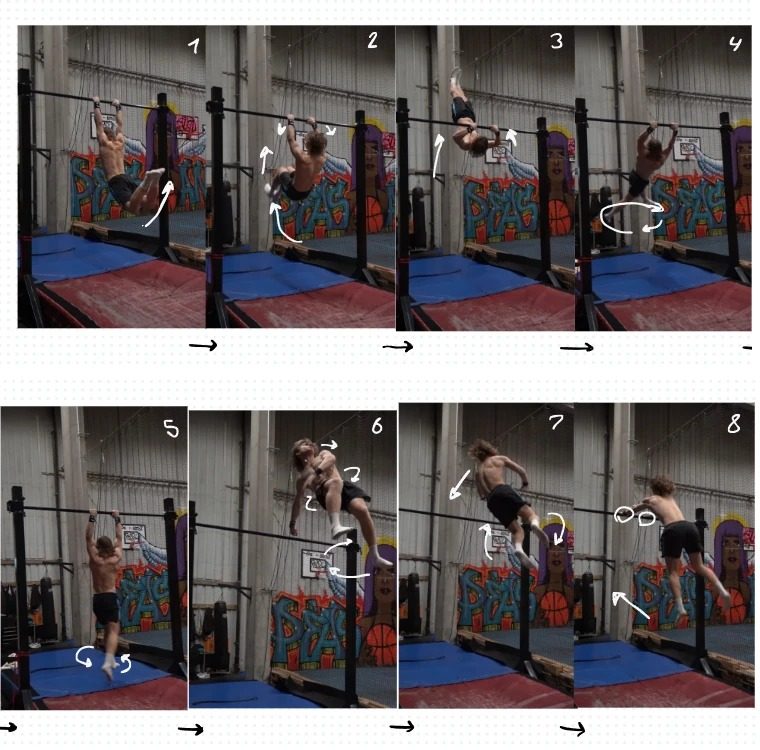
The swing on a high bar, driven by the hollow and arch shapes and a snap ('tap') between them, not by kicking.
Reps with a set speed, usually slow on the way down: 5 seconds down, a pause, then up.
In a handstand against the wall, pulling first the toes, then the heels off the wall to find balance. Balance practice.
One hard set at the day's heaviest load, then two lighter sets. Strength without grinding every set.
A total number of reps to reach in as few sets as you can: 2.5 × max means two and a half times your best set. Volume for endurance.
Knees pulled to the chest. A tuck front lever, back lever or planche is the shortest, easiest version of the hold.
An L-sit with the legs lifted above level, toward the face. More compression, more shoulder.
A handstand with the wall as a safety. Chest to the wall teaches the straight line, back to the wall the kick-up.
From a push-up position with the feet at the wall, walk the feet up and the hands in toward the wall, then back down. Strength for being upside down.
A short run of sets where the load climbs, drops and climbs again (heavy, heavier, lighter). A way to handle a new heaviest load.
On hands and knees, palms flat, rocking the weight slowly forward over the hands and back; then the same on the backs of the hands. Wrist prep before planche and handstand work.
On top of the bar, rolling the wrists from under it to on top, arms straight. The last moment of the kip and the muscle-up.
The rung you're on in a movement's ladder: the highest rung you can do for the prescribed sets with every rep clean. Every "your rung" in the plan means this.
Nothing by that name. Try a shorter word.
Not medical advice. Learn every dynamic skill with a qualified coach and mats.