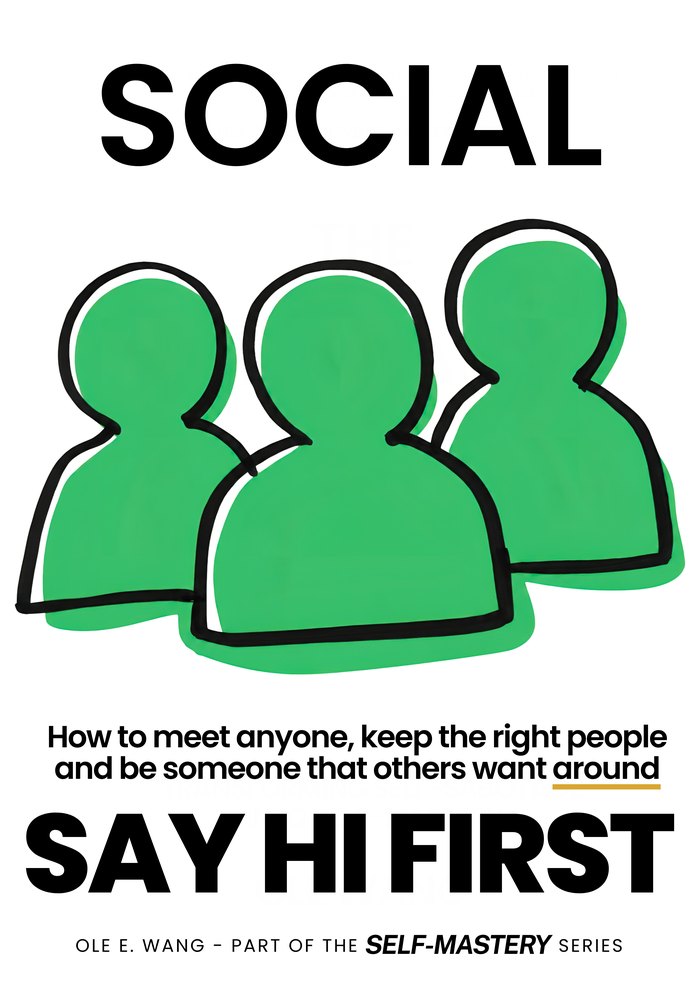
Say Hi First, the cover
The cover
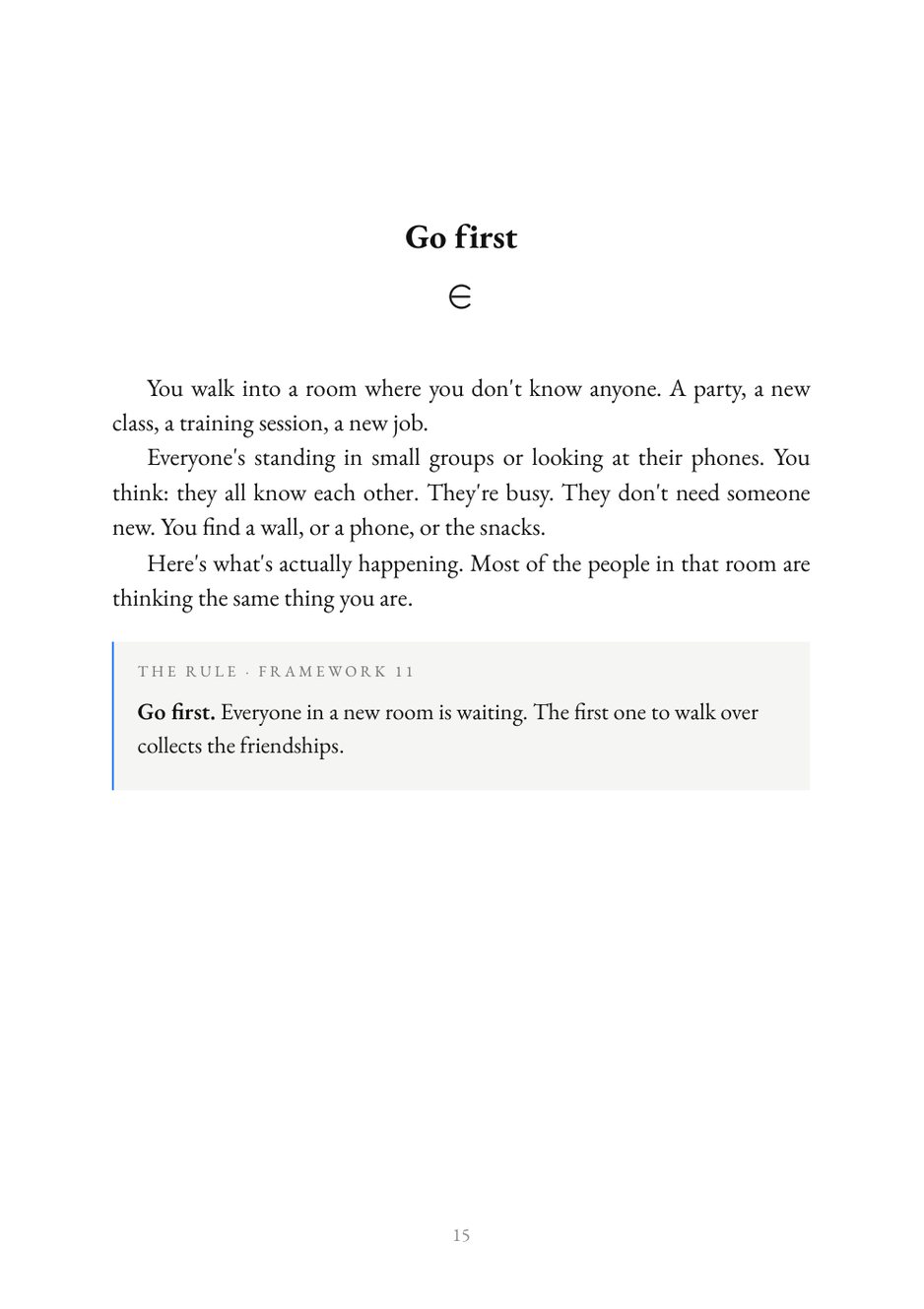
A page from Say Hi First: Go first, p. 15
Go first · p. 15
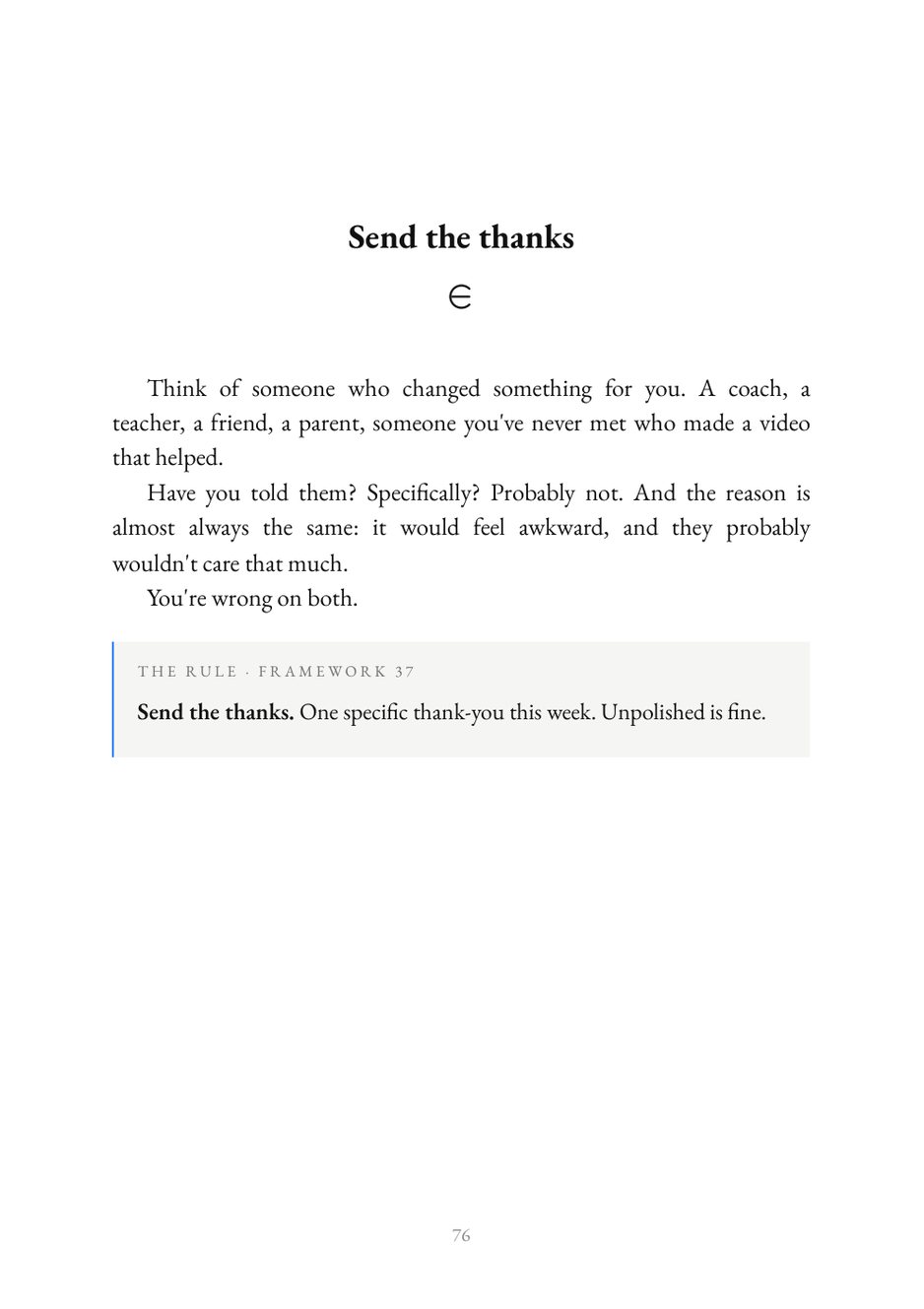
A page from Say Hi First: Send the thanks, p. 76
Send the thanks · p. 76
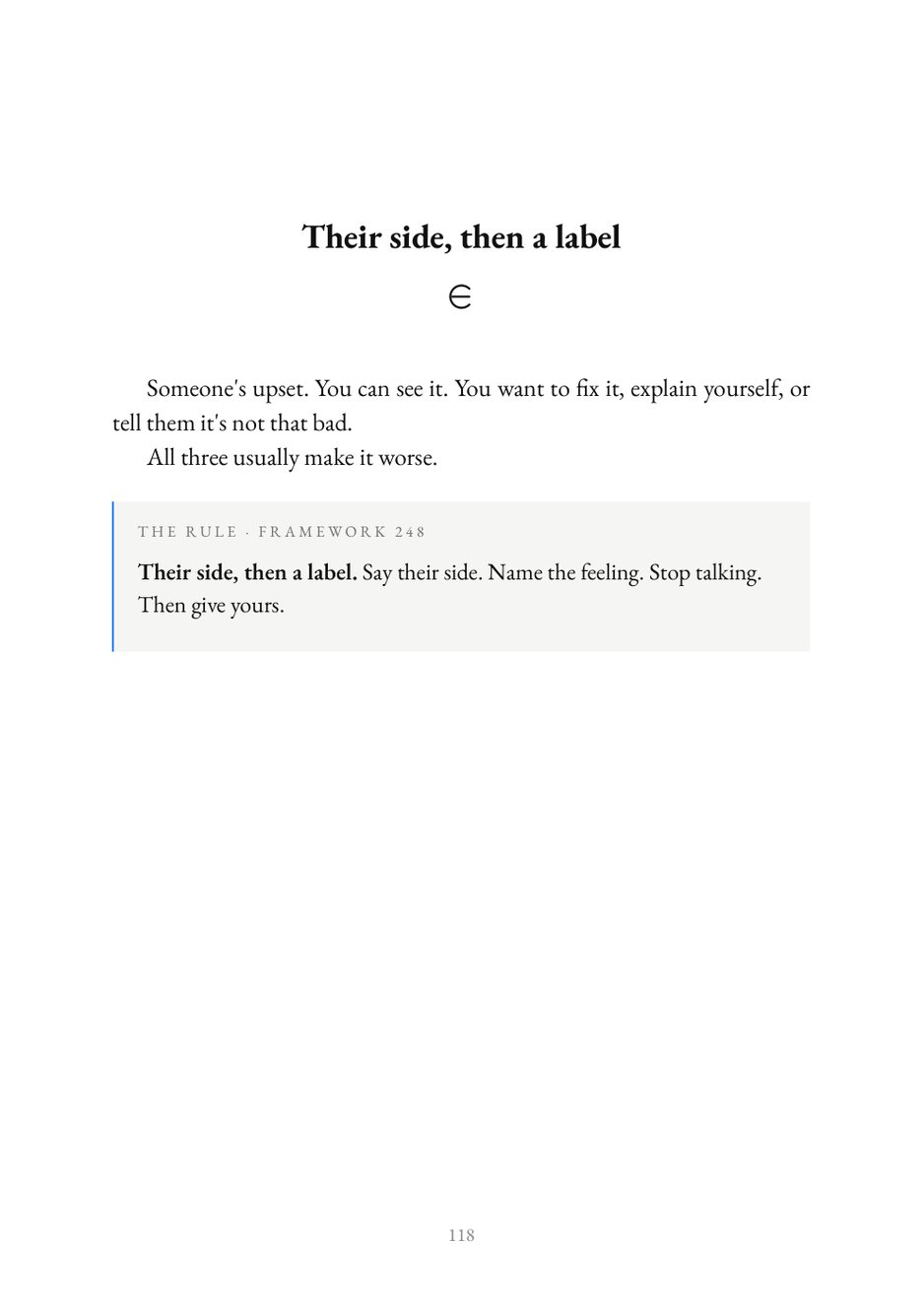
A page from Say Hi First: Their side, then a label, p. 118
Their side, then a label · p. 118
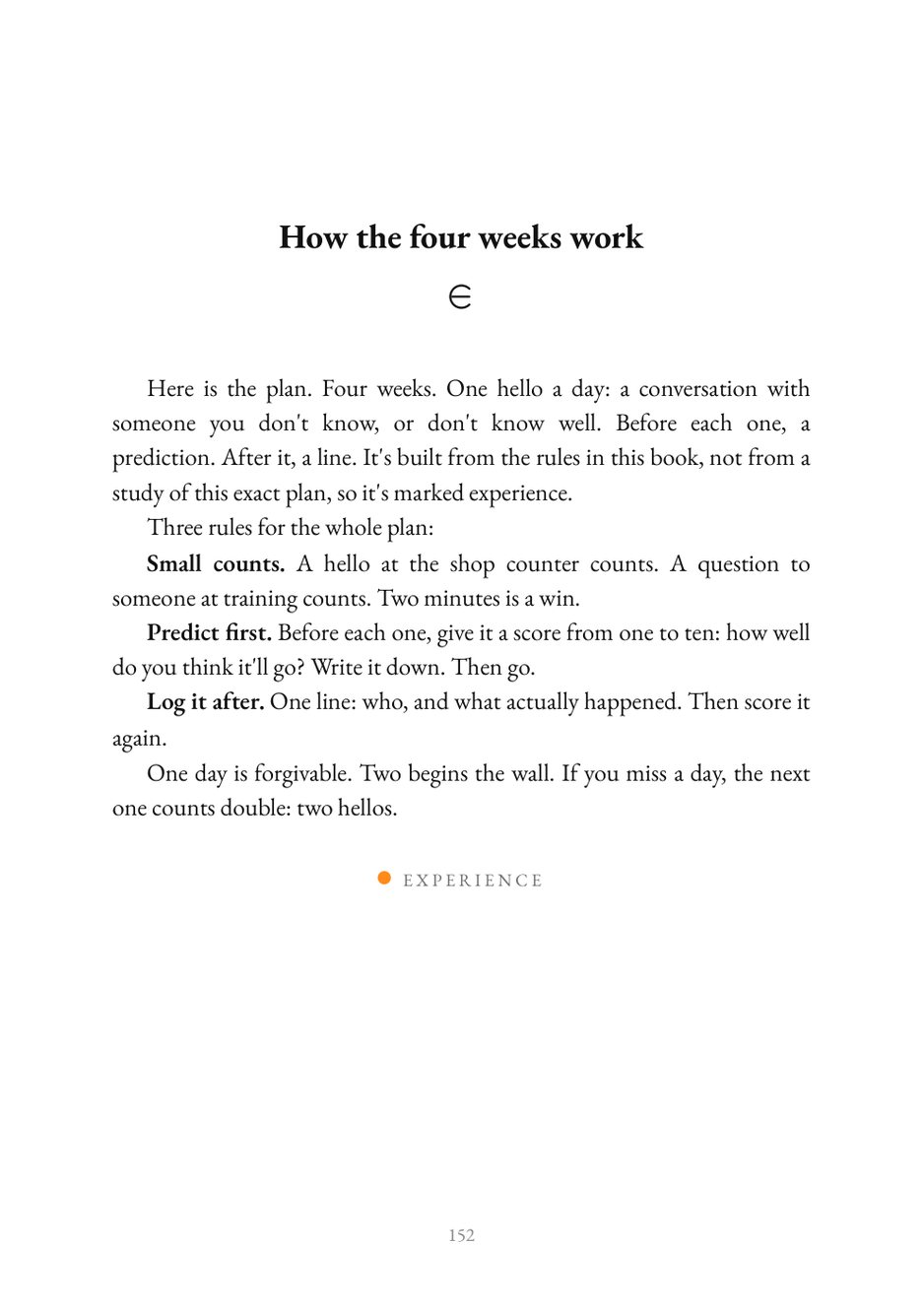
A page from Say Hi First: How the four weeks work, p. 152
How the four weeks work · p. 152
From the book · p. 25
Judge it by what they do next, not by your replay.
Ole WangSay Hi First
Book Three · Social · Self-Mastery

Say Hi First

how to meet anyone, keep the right people and be someone others want around

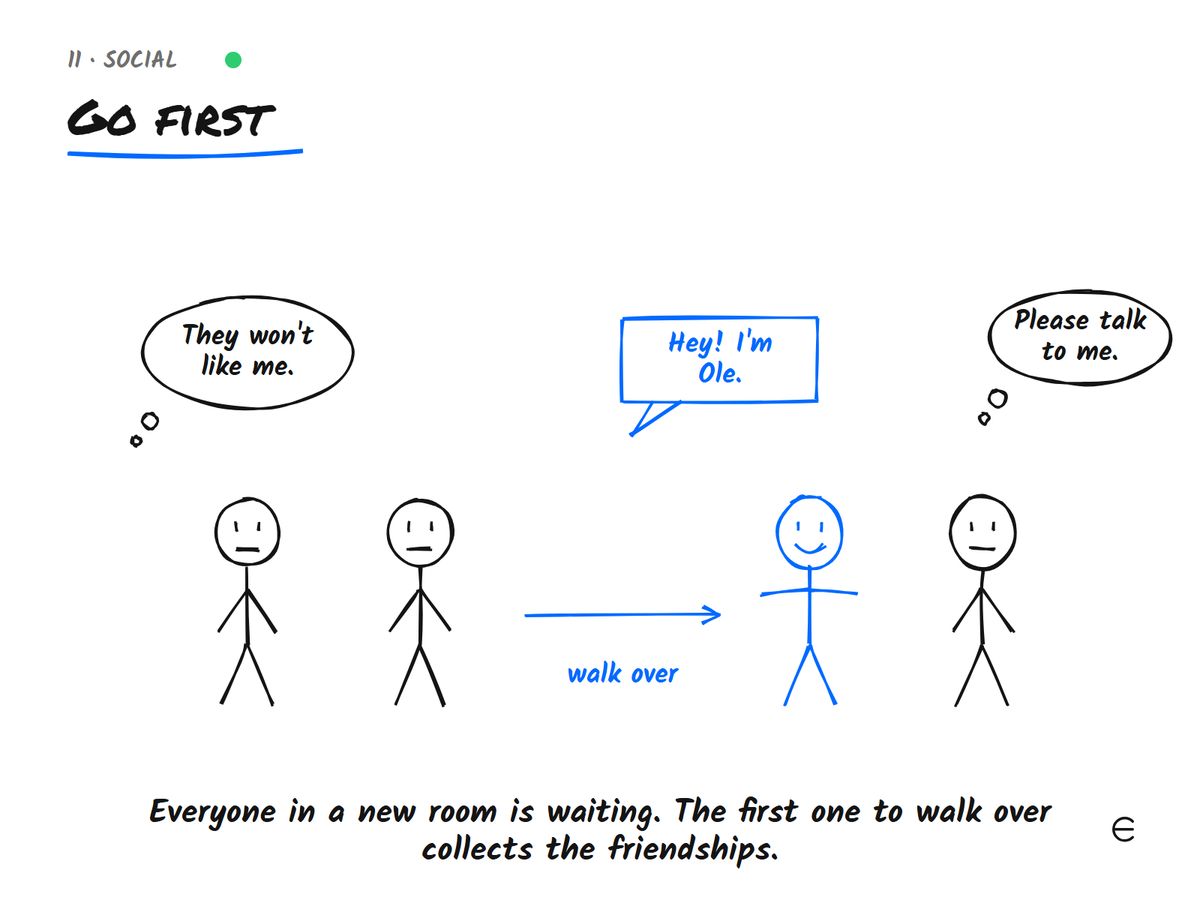
Everyone in a new room is waiting. The first one to walk over collects the friendships. This is the book about walking over, and about everything that comes after.

  • Why people liked you more than you think, and the question that makes them like you more
  • How friendships are actually made: the hours they take, and how to choose who gets them
  • The hard conversations: their side, then a label, the apology that works, and calm

€19PDF · yours permanently · delivered in seconds
Buy it now
  • Visa
  • Mastercard
  • American Express
  • Apple Pay
  • Google Pay

Secure checkout by Stripe

Refund if it isn't what you expected · every future revision, free · no discounts, ever

Description

Everyone in a new room is waiting. The first one to walk over collects the friendships.

This book contains how to meet anyone, keep the right people and have the hard conversations, built on the research into what actually happens when strangers talk, not on tricks.

The problem is that the voice saying they're busy, they won't care, it'll be weird, is wrong in the same direction almost every time, and nobody shows you the evidence.

I wrote this book to show you the evidence, and the tools that come with it.

Inside you will find…

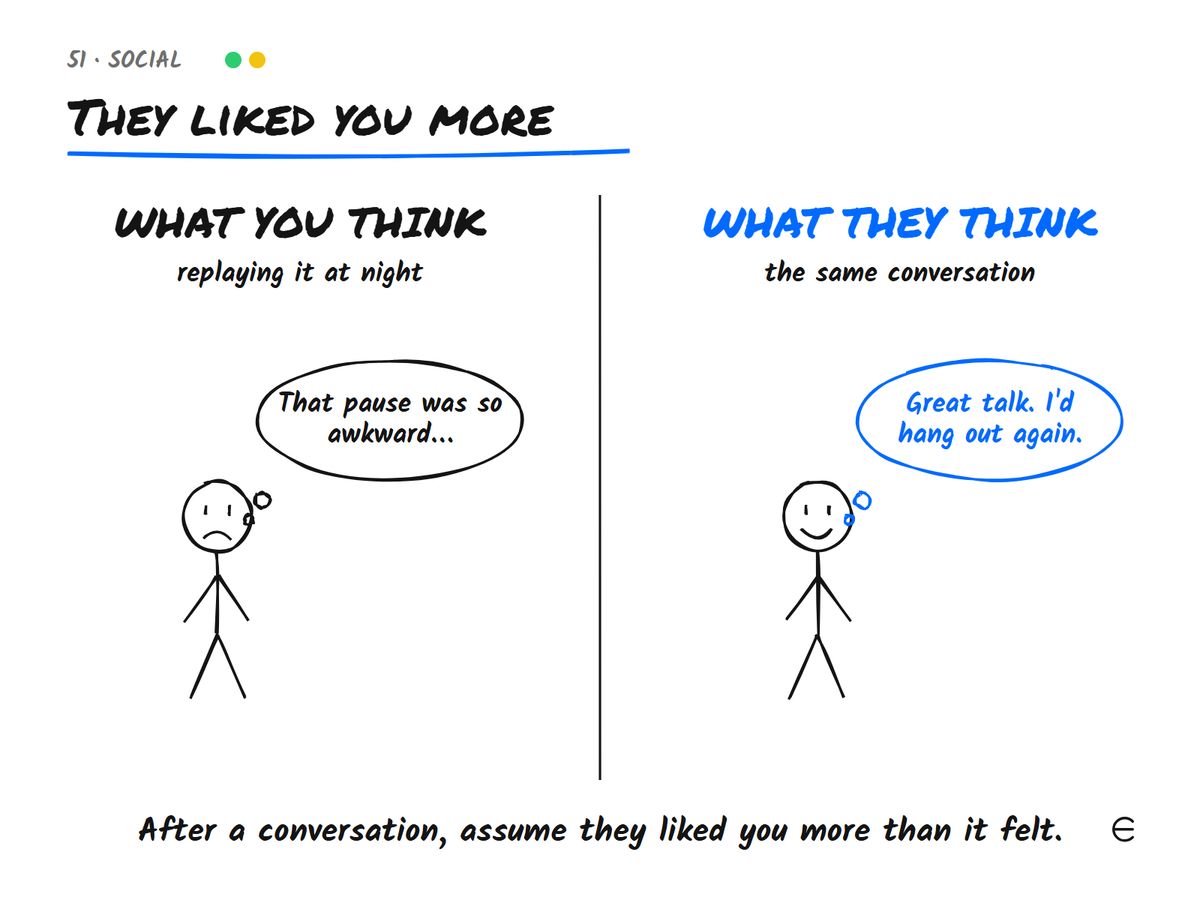
…The liking gap: why they liked you more than you think

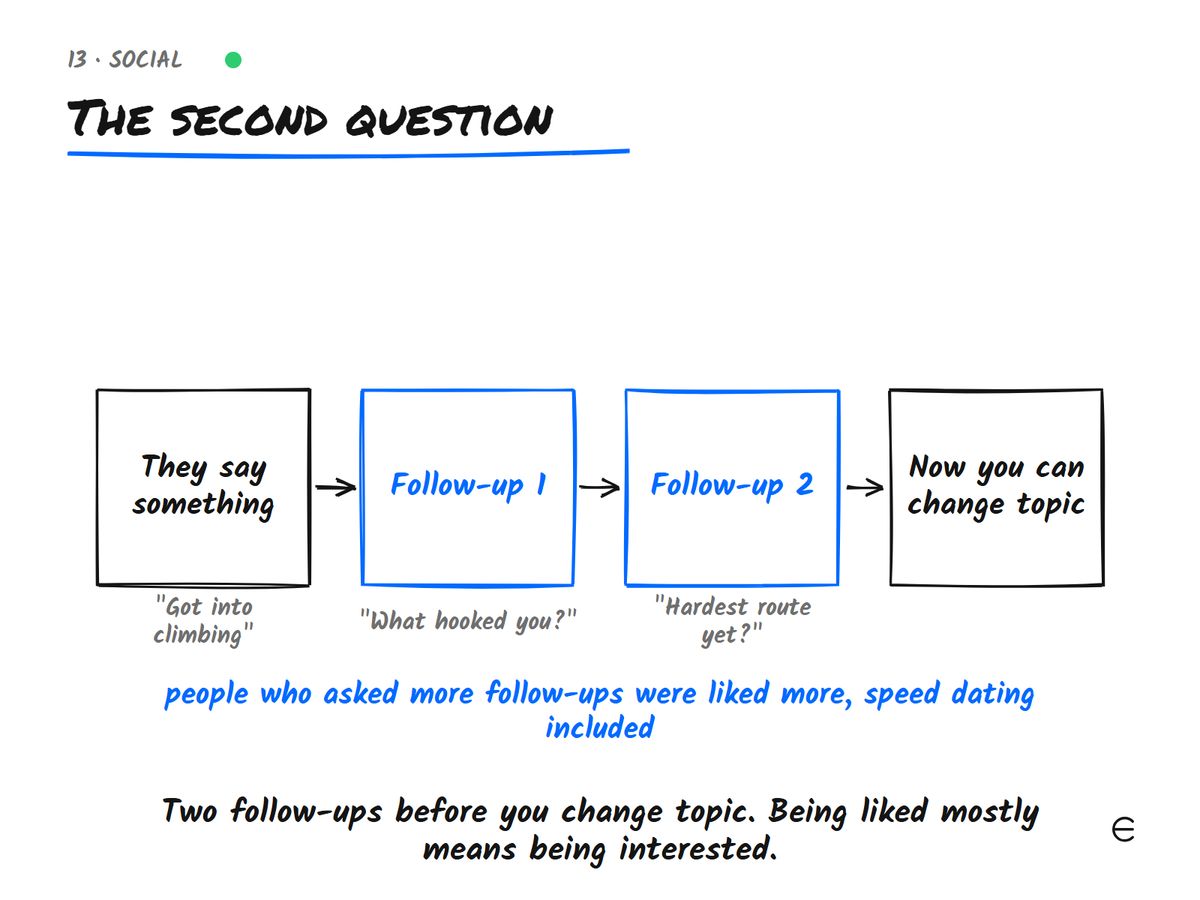
…The second question that makes people like you more

…Three floors: facts, then goals, then the story

…How to leave a conversation while it's still good

…The two-hundred-hour rule: how friendships are actually made

…Convergence, not admiration: who deserves your hours

…Their side, then a label: the order that lowers anyone's walls

…How to name a mistake and make it right, and why silence does worst

…and every other chapter, each with its grade and its source.

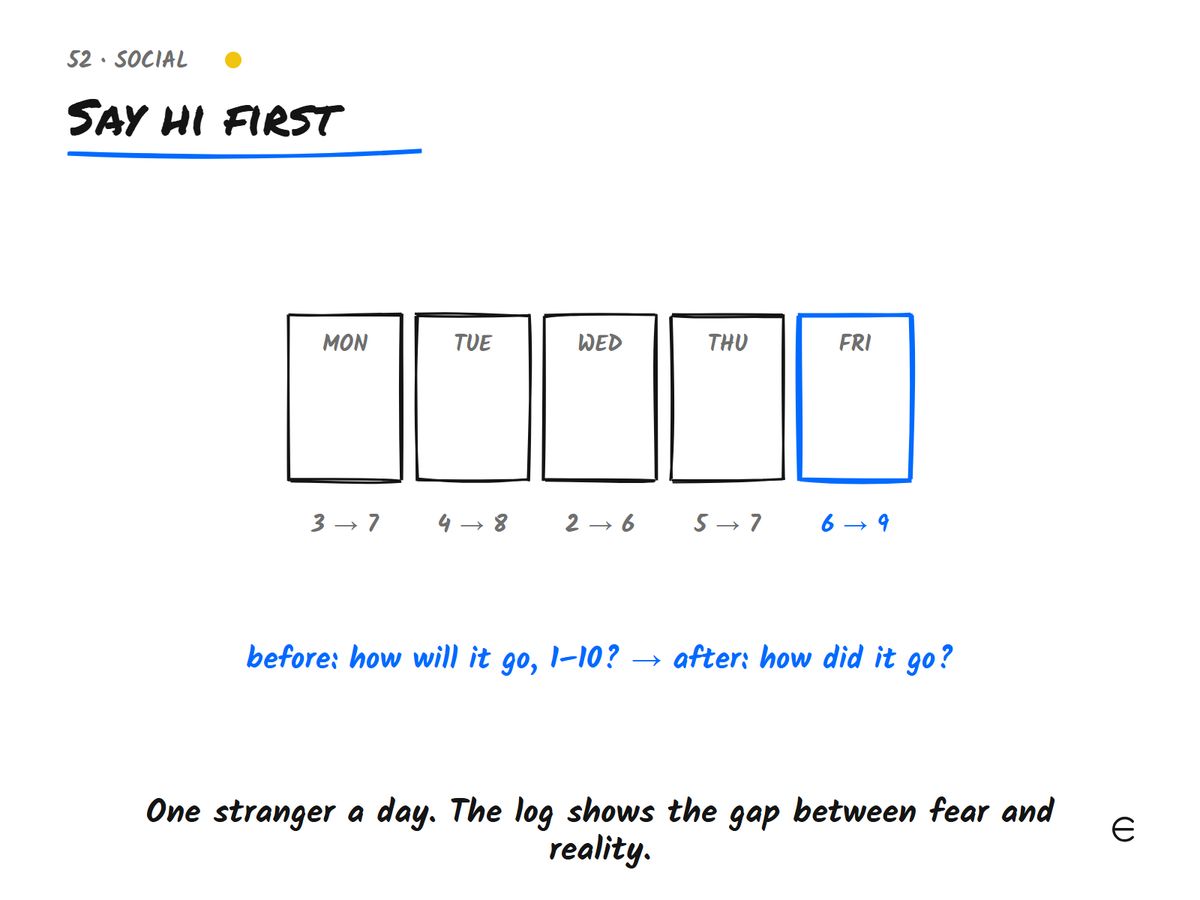
And the best part is… the four-week plan has you predict every hello before it happens and log it after, so you see the gap between fear and reality in your own handwriting.

If you want to walk into any room and know what to do, press Add to cart, use what's inside, and see for yourself.

In Say Hi First, you'll learn…

1. Level one: Starting — Meeting people is a skill. Most of it is going first.

  • Everyone in a new room is waiting. Be the one who walks over.
  • Judge it by what they do next, not by your replay.
  • Two follow-ups before you change topic.
  • Climb, don't jump.

2. Level two: Building — Meeting people is a moment. Keeping the right ones is a practice.

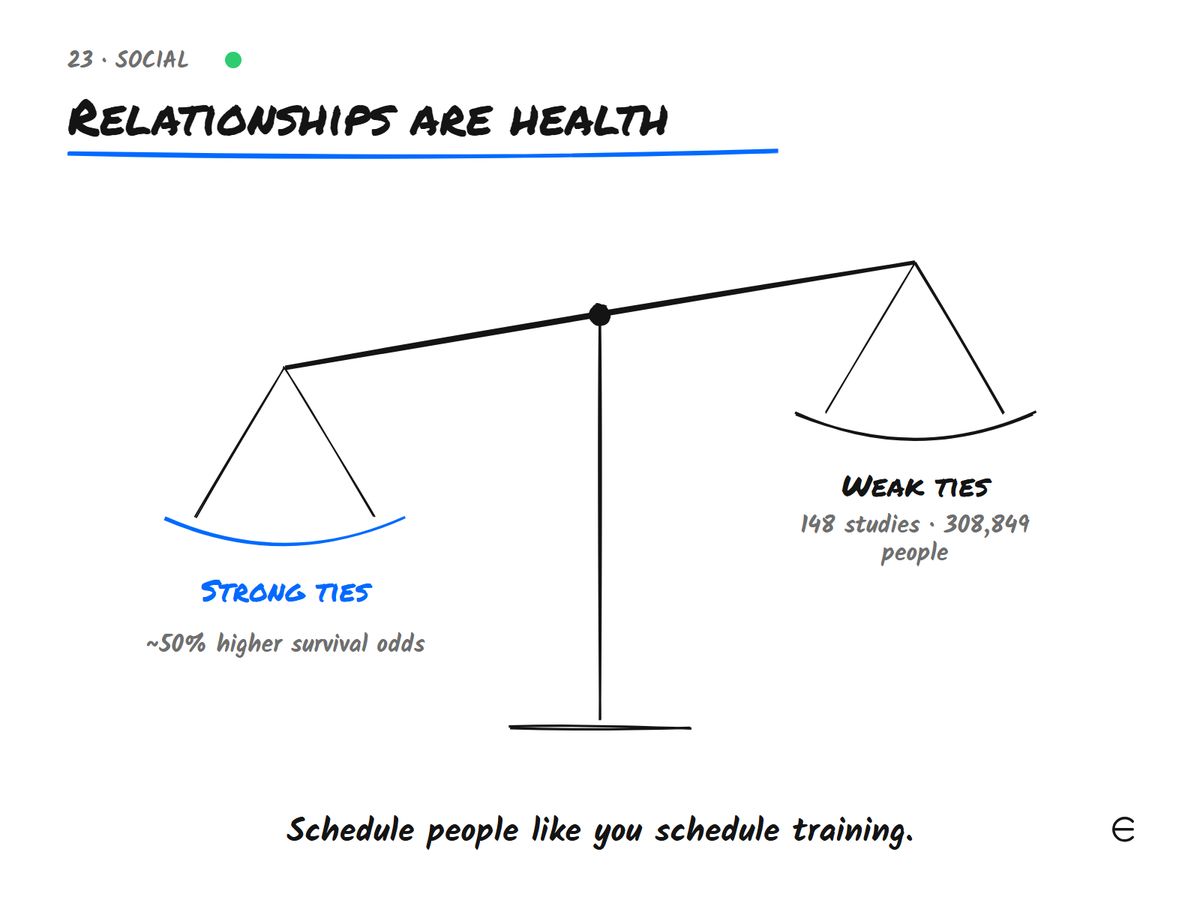
  • Schedule people like you schedule training.
  • Friends are made on a schedule.
  • Remember it, and say so.
  • What they did. What it changed. Send it.

3. Level three: Scaling — Easy conversations make friends. Hard ones keep them.

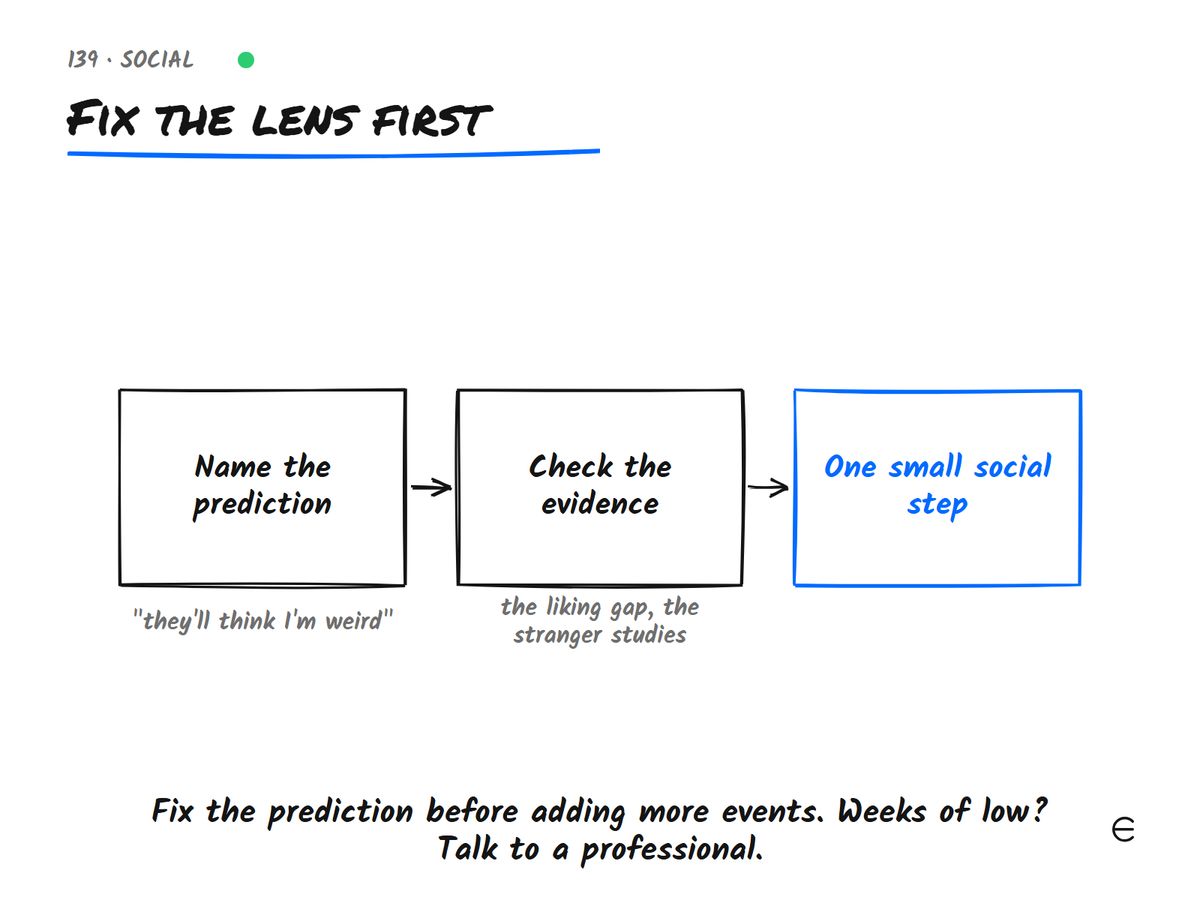
  • Fix the prediction before you add more rooms.
  • Summarise until "exactly". Then talk.
  • Understanding isn't agreeing. Say their side anyway.
  • Your part first. Then the hard part, plainly.

4. The plan: The Four Weeks — Everything so far, turned into four weeks of hellos you can start on Monday.

  • One hello a day. Predict it. Then log it.
  • Week one: go first
  • Week two: the second question
  • Week three: keep one
How to order?
  1. Press Add to cart, add any other books you want, and press Check out. Or press Buy it now for just this one.
  2. Pay by card, Apple Pay or Google Pay. Stripe handles the payment; we never see your card.
  3. Every PDF arrives by email within seconds, on a link tied to your order.

Every future revision is free. If it isn't what you expected, reply to the receipt and you get your money back.

Here's exactly what Say Hi First will show you
  • 36 chapters in three levels: starting, building, scaling
  • Every chapter graded: strong, promising, experience or contested, with the sources at the back
  • 40 frameworks, drawn on a whiteboard, one for every rule
  • The four weeks: one hello a day, predicted before and logged after
  • A log for twenty-eight days that shows the gap between fear and what happened
  • Every future revision, free

36 chapters · 40 frameworks drawn · every chapter graded

Framework 11, drawnFramework 52, drawnFramework 51, drawnFramework 13, drawnSay Hi First, the cover

What Say Hi First will teach you:

Meeting people, keeping the right ones and the hard conversations, with the research on what actually works. Every book in the series climbs the same ladder: starting, building, scaling. Then a plan you can start on Monday.

1. Meet anyone

Go first. The second question. Three floors. The thirty-second turn. Leave while it's good, and the nerves nobody can see.

2. Keep the right people

Relationships are health. The two-hundred-hour rule. Send the thanks. Convergence, not admiration. Say who you are, early.

3. Have the hard conversations

Listen to lower the walls. Their side, then a label. Contribution, not blame. Name the mistake, then make it right.

• Level one

Starting

Meeting people is a skill. Most of it is going first.

  • Go first: Everyone in a new room is waiting. Be the one who walks over. p. 15
  • They liked you more than you think: Judge it by what they do next, not by your replay. p. 21
  • The second question: Two follow-ups before you change topic. p. 26
  • Three floors: Climb, don't jump. p. 32
  • The thirty-second turn: Answer, one detail, hand it back. p. 37
  • Leave while it's good: Leave while it's still good. p. 42

+ 3 more chapters in this part

Framework 11, drawn
Framework 11 · free in the library
• Level two

Building

Meeting people is a moment. Keeping the right ones is a practice.

  • Relationships are health: Schedule people like you schedule training. p. 63
  • The two-hundred-hour rule: Friends are made on a schedule. p. 67
  • Remembered out loud: Remember it, and say so. p. 72
  • Send the thanks: What they did. What it changed. Send it. p. 76
  • Convergence, not admiration: Converge on the deep things. Admire whoever you like. p. 81
  • Clear the ambivalent: Not deciding is the expensive option. p. 86

+ 3 more chapters in this part

Framework 23, drawn
Framework 23 · free in the library
• Level three

Scaling

Easy conversations make friends. Hard ones keep them.

  • Fix the lens first: Fix the prediction before you add more rooms. p. 107
  • Listen to lower the walls: Summarise until "exactly". Then talk. p. 112
  • Their side, then a label: Understanding isn't agreeing. Say their side anyway. p. 118
  • Contribution, not blame: Your part first. Then the hard part, plainly. p. 124
  • Name the mistake, then make it right: Silence does worst. Name it, then fix it. p. 130
  • Reason plus choice: The reason, and the choice. p. 135

+ 2 more chapters in this part

Framework 139, drawn
Framework 139 · free in the library
• The plan

The Four Weeks

Everything so far, turned into four weeks of hellos you can start on Monday.

  • How the four weeks work: One hello a day. Predict it. Then log it. p. 152
  • Week one: go first p. 154
  • Week two: the second question p. 155
  • Week three: keep one p. 156
  • Week four: the hard one p. 157
  • The log: Predict it. Do it. Log the gap. p. 158

+ 1 more chapters in this part

What readers say

No reviews yet. None will be written for this book. When readers send theirs, they go here with the name they chose, low ratings included.

Some readers got a free review copy from Ole. Nobody is paid for a review, and none is edited.

Read it? Leave a review →

Perfect for the quiet one, the one in the wrong room & the peacekeeper

Meeting people, keeping the right ones and the hard conversations, with the research on what actually works. Who it isn't for: someone who wants tricks to manipulate people. Every tool in it is for caring about people better, and the book says so on the first page.

For the quiet one

If you freeze in new rooms

  • Go first: your name and one question, within ten seconds.
  • They can't see your nerves nearly as much as you feel them.
  • Four weeks of one hello a day, predicted and logged.

For the one in the wrong room

If you have people, but not your people

  • Convergence, not admiration.
  • The two-hundred-hour rule, and who gets the hours.
  • Clear the ambivalent: closer, or a kinder distance.

For the peacekeeper

If you avoid hard conversations

  • Their side, then a label. Then yours.
  • Contribution, not blame, and warn, pause, then the hard part.
  • Strength is calm.

Frequently asked questions

Answers about the book, the PDF and refunds.

Buy the book online
Will it work if I'm an introvert?

Yes. Nothing in it asks you to be loud. It asks you to go first, ask a second question and leave while it's good. Most of it is quieter than what you're doing now.

What exactly do I get?

A PDF of 197 A5 pages: 36 chapters in three levels, every one graded by the evidence behind it, 40 framework drawings, the four weeks and a log to write in, then the notes with every source. It arrives by email within seconds, on a link tied to your order.

Who wrote it?

I'm Ole. I build Ecosystem HQ, I'm a freestyle calisthenics athlete, and I grade every method I teach by the research behind it: built in the open, corrected in public.

Why is it only €19?

Because the point of a book is that it travels, not that it earns. It's the cheapest way to find out whether I'm worth more of your attention, and it should overdeliver by a visible margin or it hasn't done its job.

There is no discount and there never will be, so nobody who paid full price ever watches it go on sale.

Where are the reviews?

Above, written by readers, and only by readers, with the name each reader chose. Some read a free review copy from Ole; nobody is paid for a review and none is edited. Low ratings go up too.

Until there are some, check the book instead of the praise: the lines above with their page numbers, four real pages, and every source listed at the back.

What if it isn't what I expected?

Reply to the receipt and I'll refund you.

You'll be asked at checkout to confirm you want it delivered immediately, which under EU rules means the 14-day withdrawal right doesn't survive the download. I'll refund you anyway. I'd rather have that than your money.

how to meet anyone, keep the right people and be someone others want around, with Say Hi First

Meeting people, keeping the right ones and the hard conversations, with the research on what actually works. Press the button, use what's inside, and see for yourself.

Buy it now · €19

About Ole Wang

The mission: help ambitious young men master themselves, as one system.

Body, mind, the people around you, your craft and what you build: one book for each, every method graded by the evidence behind it, every framework drawn and free in the library.

A freestyle calisthenics athlete and the builder of Ecosystem HQ. Self-published, built in the open, corrected in public. No discounts, no countdowns, no numbers without documents, and no review we wrote.

Get started! Read the books

Five books · 5 areas of life · every chapter graded

Ole Wang, white tee
THE LIST

New books and free pieces, first.

One email when something ships: a new book, a revision of yours, a new framework worth your time. Nothing else, and unsubscribe from any email.

YOUR REVIEW

What did it change? Or what didn't it?

It goes on the book's page with the name you choose, once Ole has read it. He approves for spam and names, not for opinion: low ratings go up too. Your email is never shown.