Bodyweight Is Enough, the cover
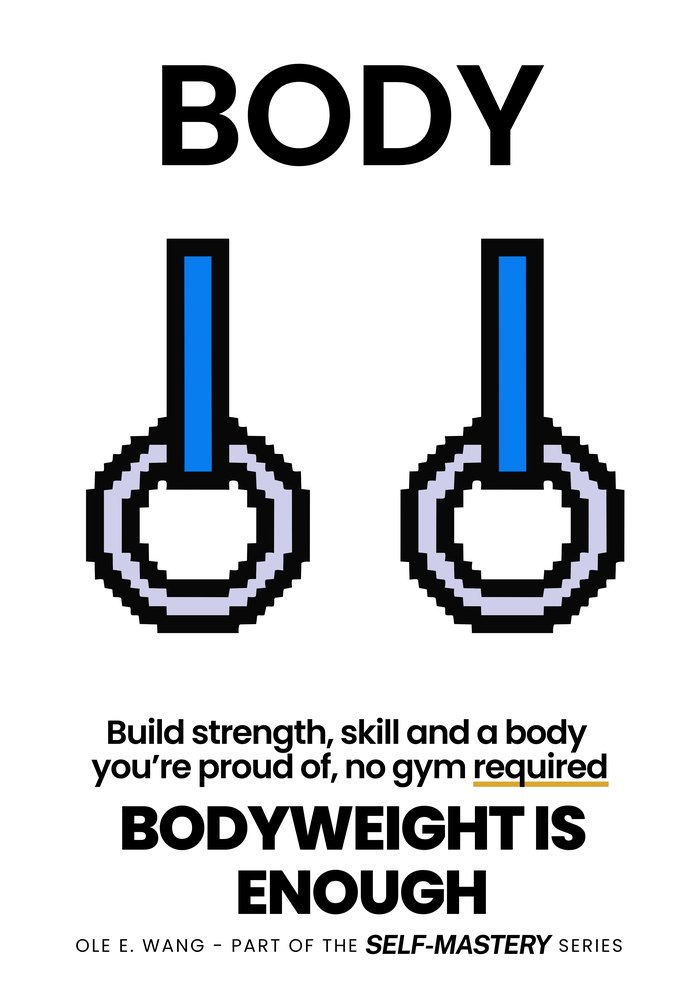
The cover
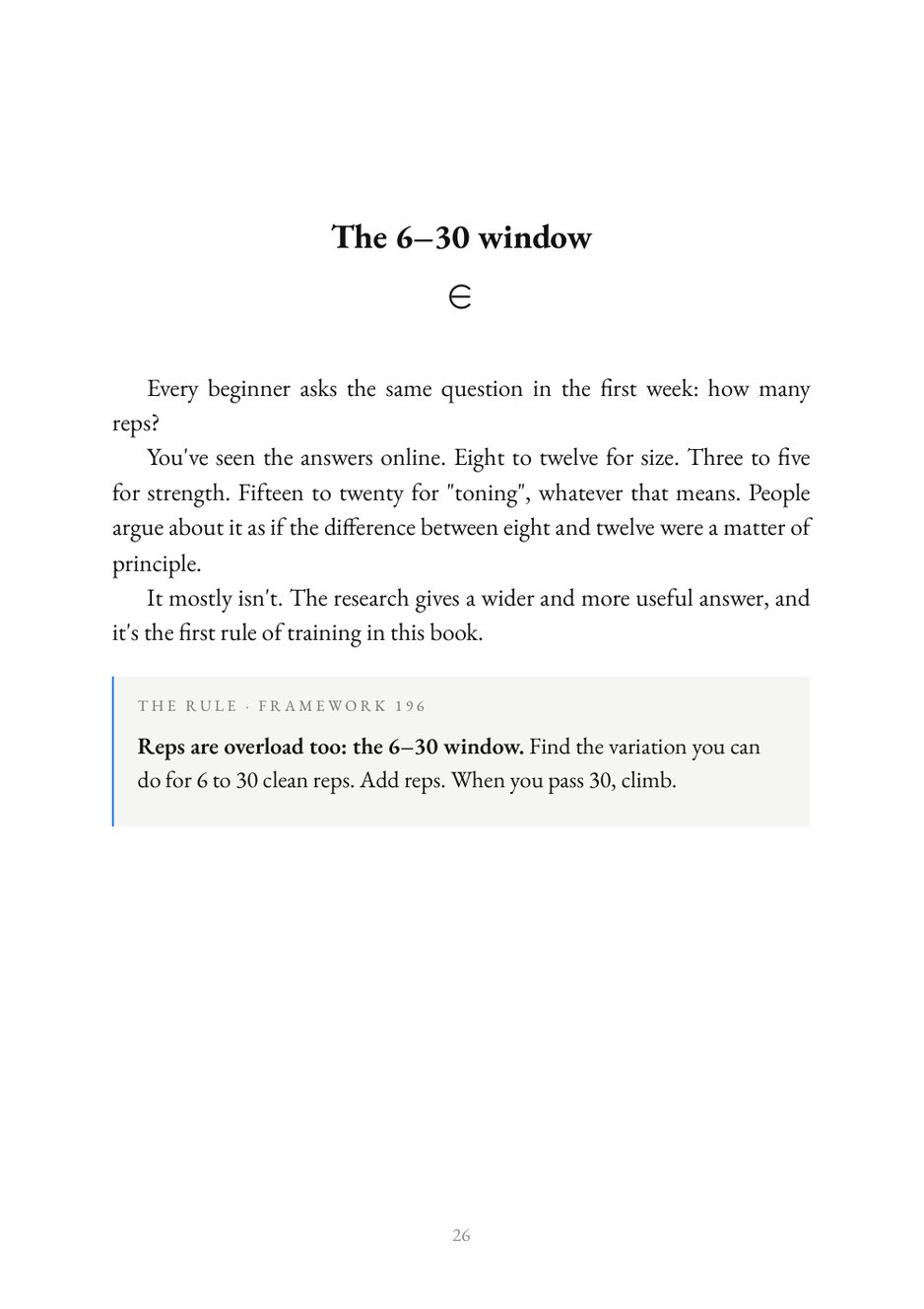
A page from Bodyweight Is Enough: The 6–30 window, p. 26
The 6–30 window · p. 26
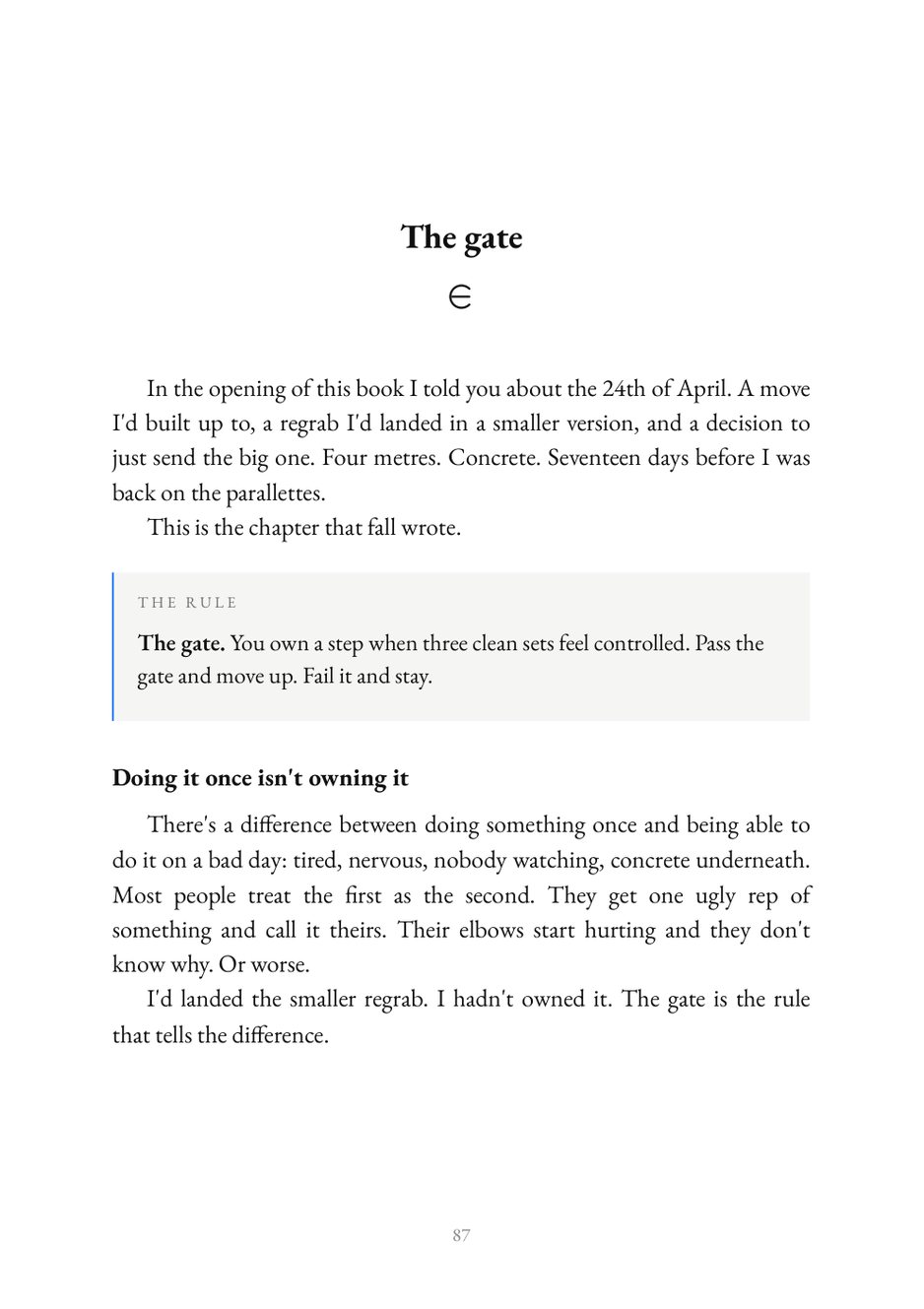
A page from Bodyweight Is Enough: The gate, p. 87
The gate · p. 87
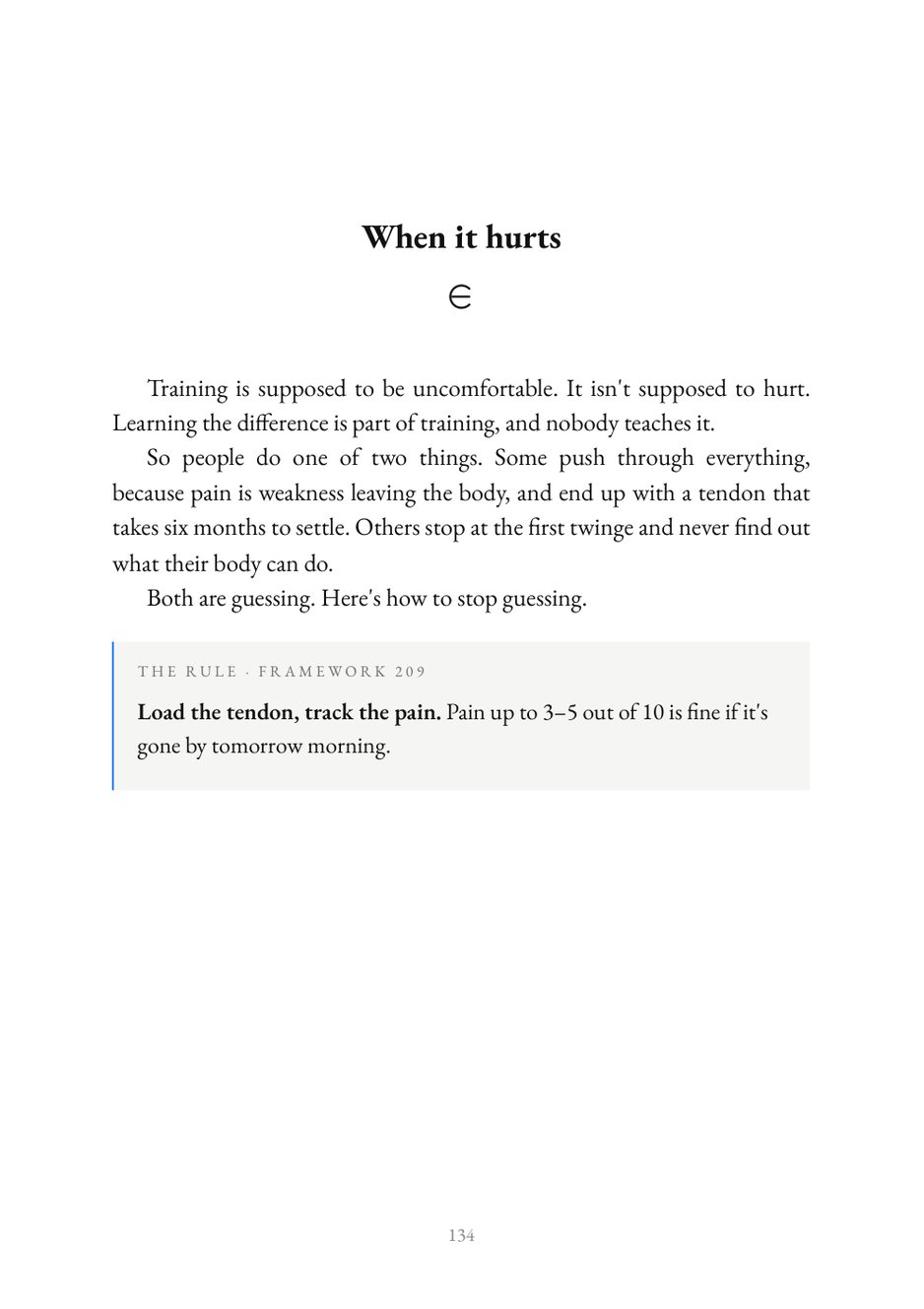
A page from Bodyweight Is Enough: When it hurts, p. 134
When it hurts · p. 134
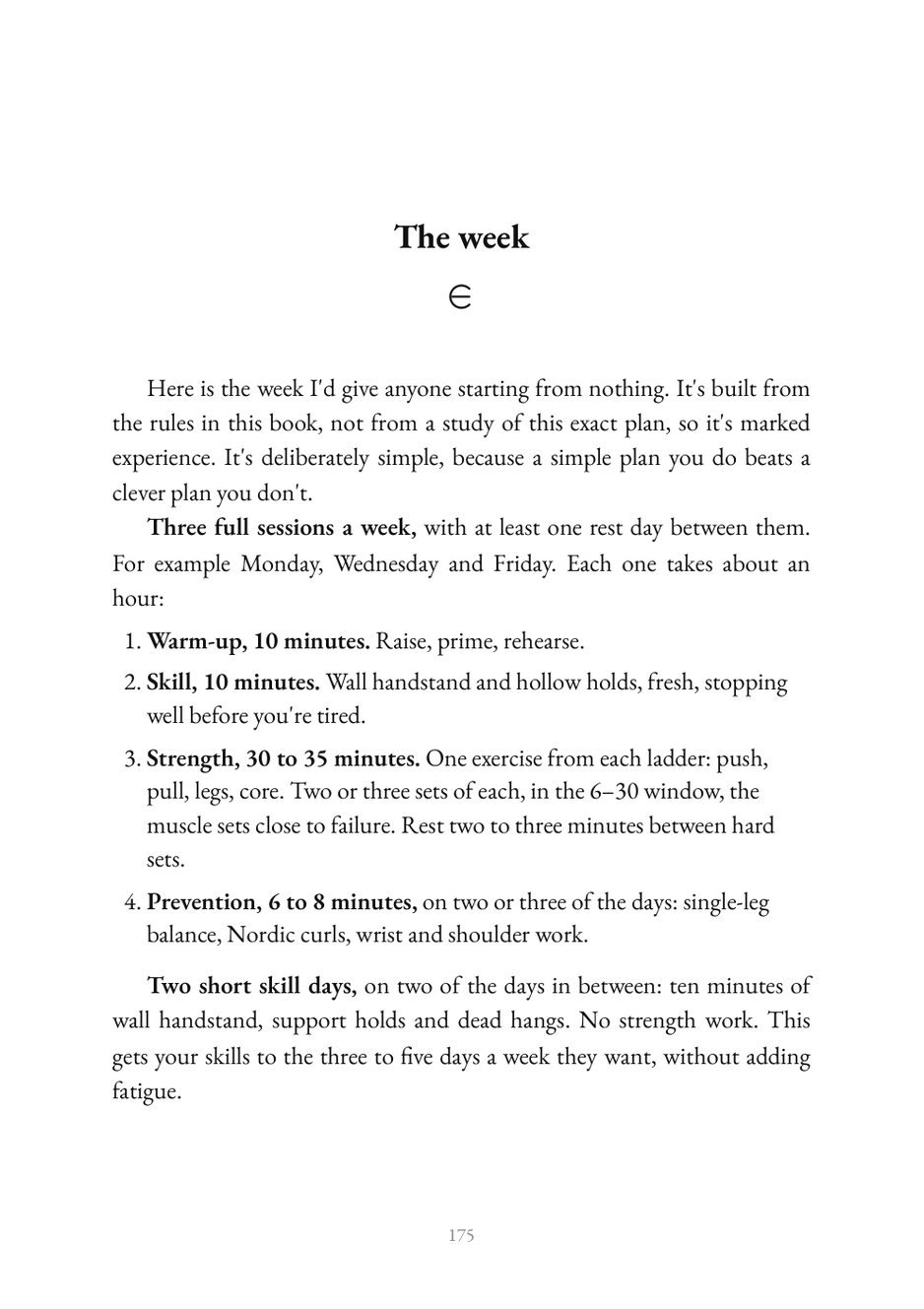
A page from Bodyweight Is Enough: The week, p. 175
The week · p. 175
From the book · p. 25
The muscle doesn't know it's a barbell.
Ole WangBodyweight Is Enough
Book One · Body · Self-Mastery

Bodyweight Is Enough

build strength, skill and a body you're proud of, no gym required

You don't need a gym. You need a floor, a bar and the truth about what works: the rules that turn someone who exercises into someone who trains, every one graded by the evidence behind it.

  • Why the muscle doesn't know it's a barbell, and the 6–30 window that makes bodyweight enough
  • The ladders for push, pull, legs and core, and the gate that decides when you climb
  • How to keep going for years: sleep, food, when it hurts, and the comeback after a miss

€19PDF · yours permanently · delivered in seconds
Buy it now
  • Visa
  • Mastercard
  • American Express
  • Apple Pay
  • Google Pay

Secure checkout by Stripe

Refund if it isn't what you expected · every future revision, free · no discounts, ever

Description

You can build real strength and real skills with your own bodyweight, without a gym, a programme you can't follow or a highlight reel you can't copy.

This book contains the rules I train by: the ladders, the gate between every rung and the twelve weeks I'd give anyone starting from nothing. Every one of them graded by the evidence behind it, so you know what's proven and what's just experience.

The problem is that most training advice either hands you a gym or hands you a highlight reel. Nobody hands you the rung you're on, the rung after it, and the test that tells you when to climb.

I wrote this book to solve that. It was finished after a four-metre fall onto concrete taught me the one rule I'd skipped.

Inside you will find…

…The 6–30 window that makes bodyweight enough to build muscle

…The ladders for push, pull, legs and core, from a push-up against a table to the one-arm push-up

…The gate: three clean sets of five before you're allowed the next rung

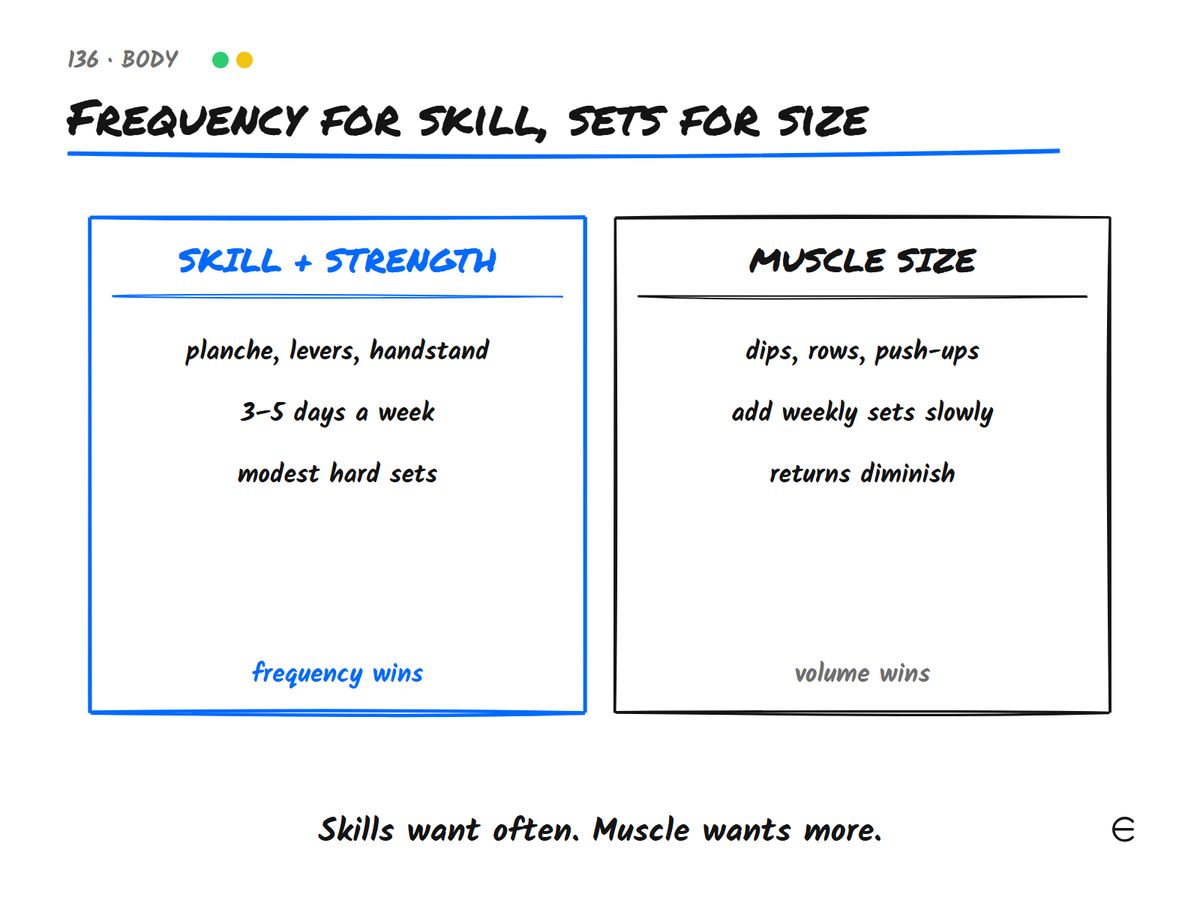
…Why skills want often and muscle wants more, and how to train both in one week

…The handstand, honestly: lock the line, steer with the hands, bail out clean

…The long skills: the muscle-up, front lever, planche and handstand push-up, rung by rung

…When it hurts: the morning rule that tells you whether to train

…Drop to the floor, not to zero: what to do on the weeks that go wrong

…and every other chapter, each with its grade and its source.

And the best part is… you can start today, on the floor you're standing on, with the test day in the twelve-week plan.

If you want a body that can do things, not just look like it can, press Add to cart, use what's inside, and see for yourself.

In Bodyweight Is Enough, you'll learn…

1. Level one: Starting — You need a floor, a bar and the truth about what works.

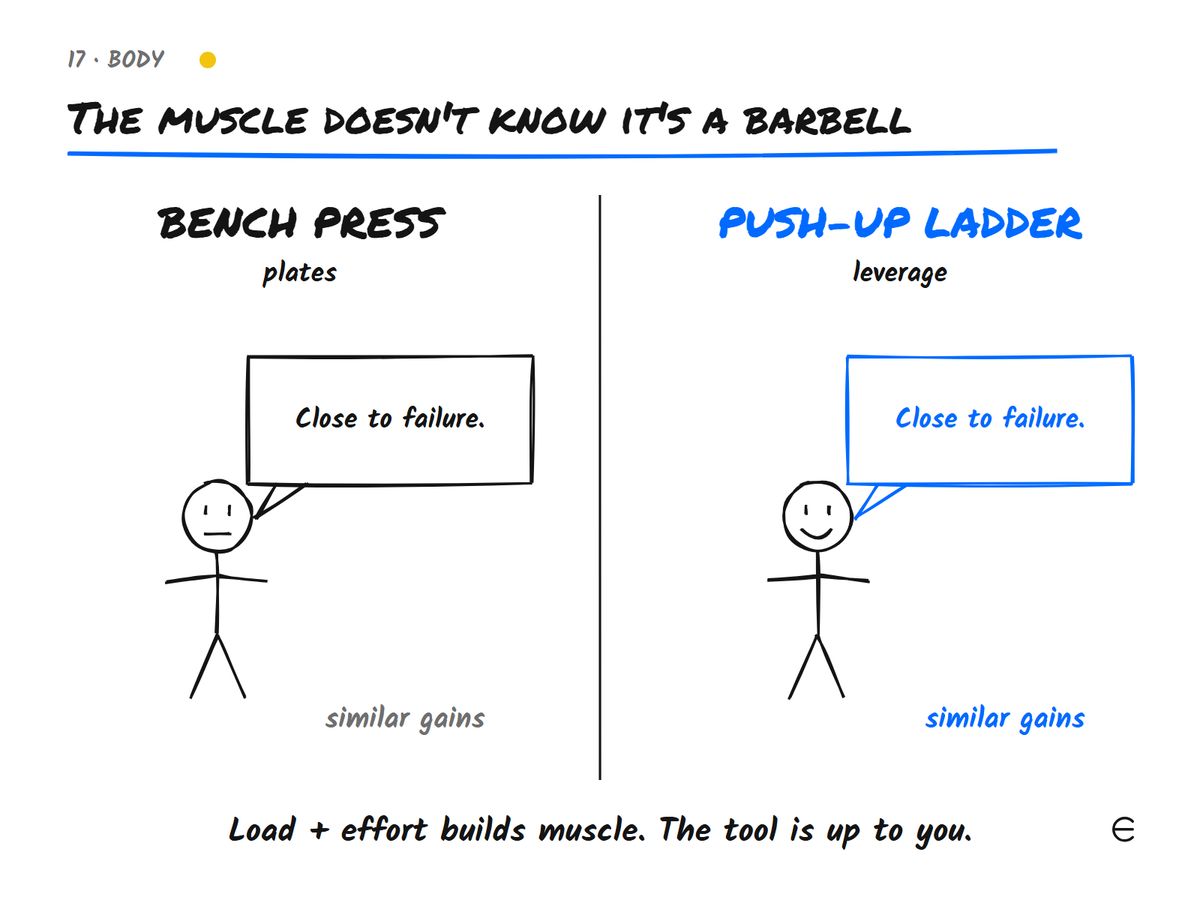
  • The muscle doesn't know it's a barbell.
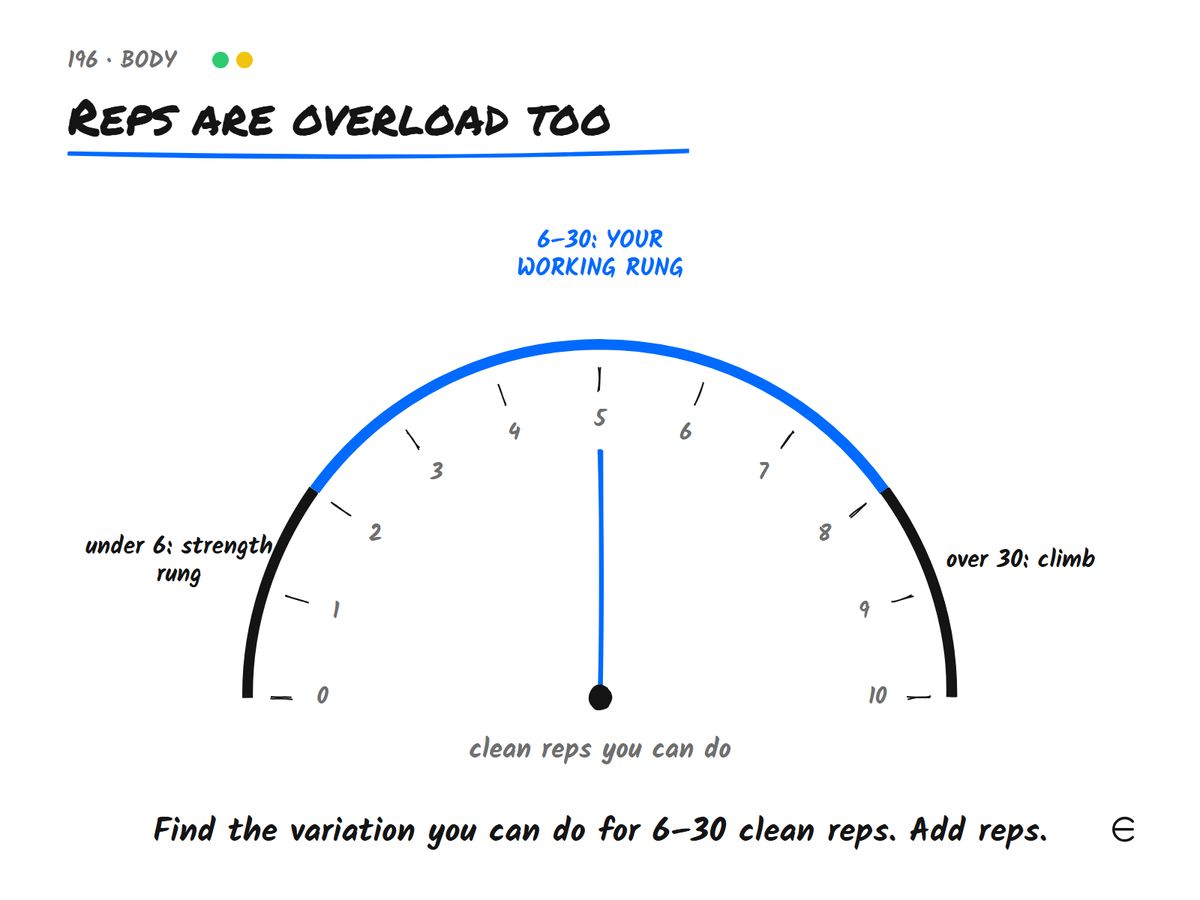
  • Find the variation you can do for 6 to 30 clean reps. Add reps. When you pass 30, climb.
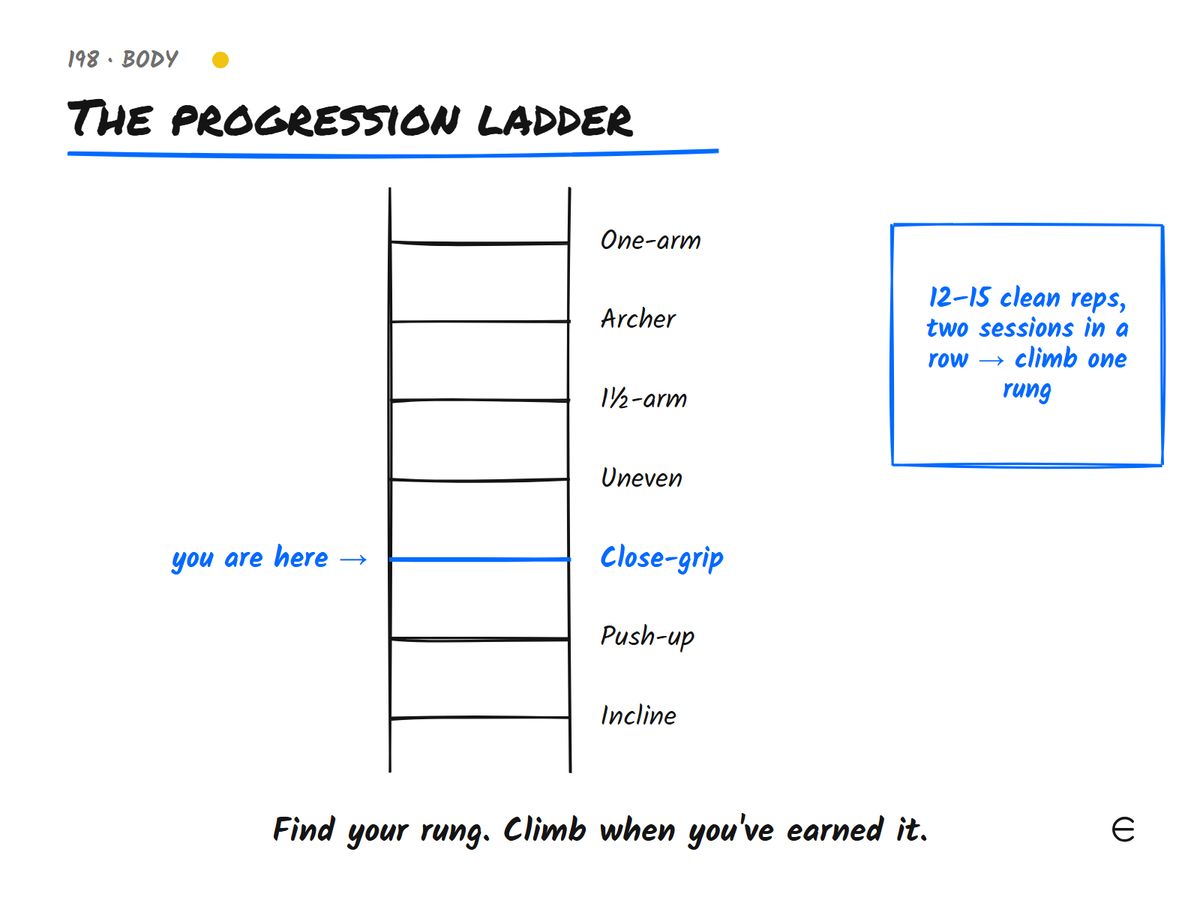
  • Find your rung. Climb when you've earned it. Two sessions in a row is a fact.
  • Same three steps, same order, every session.

2. Level two: Building — The rules that turn someone who exercises into someone who trains.

  • Skills want often. Muscle wants more.
  • Muscle sets end close to failure. Skill sets end while they still look good.
  • Full range is the honest rep. Half reps make the log look better than the body.
  • Pass the gate and move up. Fail it and stay. You don't need to fall four metres to learn it.

3. Level three: Scaling — How to keep going for years, and come back when you fall.

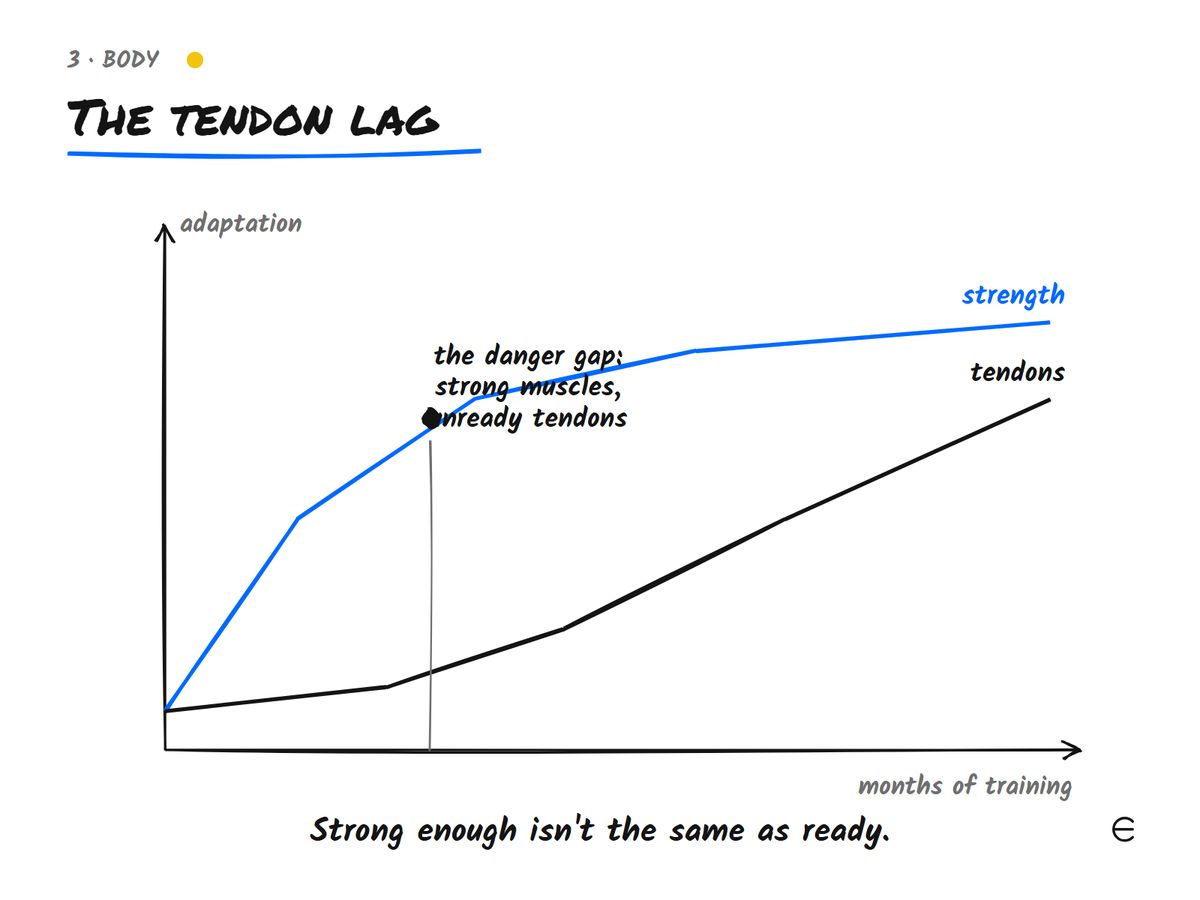
  • Strong enough isn't the same as ready.
  • Check it tomorrow morning.
  • Small steps. Sudden jumps are where injuries live.
  • Drop to the floor, not to zero. The session after a miss is the one that counts.

4. The plan: The First Twelve Weeks — Everything so far, turned into a plan you can start on Monday.

  • A simple plan you do beats a clever plan you don't.
  • Weeks one to four: learn the standards
  • Weeks five to eight: climb
  • Weeks nine to twelve: own it

5. The library: The Library — Every rung in this book, explained once. Come back to it whenever you climb.

  • Push: every rung
  • Pull: every rung
  • Legs: every rung
  • Core and holds: every rung
How to order?
  1. Press Add to cart, add any other books you want, and press Check out. Or press Buy it now for just this one.
  2. Pay by card, Apple Pay or Google Pay. Stripe handles the payment; we never see your card.
  3. Every PDF arrives by email within seconds, on a link tied to your order.

Every future revision is free. If it isn't what you expected, reply to the receipt and you get your money back.

Here's exactly what Bodyweight Is Enough will show you
  • 41 chapters in three levels: starting, building, scaling
  • Every chapter graded: strong, promising, experience or contested, with the sources at the back
  • 22 frameworks, drawn on a whiteboard, one for every rule
  • The first twelve weeks: a plan you can start on Monday, two test days and a log for every session
  • The library: every rung explained once, setup, rep, faults and when to climb
  • Every future revision, free

41 chapters · 22 frameworks drawn · every chapter graded

Framework 198, drawnFramework 127, drawnFramework 17, drawnFramework 196, drawnBodyweight Is Enough, the cover

What Bodyweight Is Enough will teach you:

Build real strength and real skills with your bodyweight: the rules, the ladders, the twelve weeks and the log. Every book in the series climbs the same ladder: starting, building, scaling. Then a plan you can start on Monday.

1. Find your rung and climb it

The 6–30 window, the ladders for push, pull, legs and core, and the gate: three clean sets of five before the next rung.

2. Train like someone who trains

Skills want often, muscle wants more. Close for size, fresh for skill. Film it, because feelings lie and footage doesn't.

3. Keep going for years

Sleep, food, the tendon lag, no spikes, and drop to the floor, not to zero, on the weeks that go wrong.

• Level one

Starting

You need a floor, a bar and the truth about what works.

  • Bodyweight is enough: The muscle doesn't know it's a barbell. p. 14
  • The 6–30 window: Find the variation you can do for 6 to 30 clean reps. Add reps. When you pass 30, climb. p. 26
  • Find your rung. Climb when you've earned it. Two sessions in a row is a fact. p. 32
  • Raise, prime, rehearse: Same three steps, same order, every session. p. 38
  • The first push-up: A push-up with a sag in it is a different exercise. Count it as one. p. 44
  • Pull is where you'll grow fastest: Hang before you pull. Lower before you lift. p. 49

+ 3 more chapters in this part

Framework 17, drawn
Framework 17 · free in the library
• Level two

Building

The rules that turn someone who exercises into someone who trains.

  • Skills want often. Muscle wants more. p. 69
  • Close for size, fresh for skill: Muscle sets end close to failure. Skill sets end while they still look good. p. 76
  • Full range first: Full range is the honest rep. Half reps make the log look better than the body. p. 82
  • The gate: Pass the gate and move up. Fail it and stay. You don't need to fall four metres to learn it. p. 87
  • Film it: Feelings lie. Footage doesn't. p. 92
  • The handstand, honestly: Lock the line. Steer with the hands. Bail out clean. p. 98

+ 4 more chapters in this part

Framework 136, drawn
Framework 136 · free in the library
• Level three

Scaling

How to keep going for years, and come back when you fall.

  • Strong enough isn't the same as ready. p. 129
  • When it hurts: Check it tomorrow morning. p. 134
  • No spikes: Small steps. Sudden jumps are where injuries live. p. 140
  • Drop to the floor, not to zero. The session after a miss is the one that counts. p. 145
  • The routine before the rep: Same twenty seconds every time. A routine you only use under pressure is a new thing under pressure. p. 151
  • Train with people, not just near them. p. 156

+ 2 more chapters in this part

Framework 3, drawn
Framework 3 · free in the library
• The plan

The First Twelve Weeks

Everything so far, turned into a plan you can start on Monday.

  • The week: A simple plan you do beats a clever plan you don't. p. 175
  • Weeks one to four: learn the standards p. 178
  • Weeks five to eight: climb p. 180
  • Weeks nine to twelve: own it p. 181
  • The test day p. 183
  • The log: One line a session. One sentence a week to someone. That's the whole system. p. 184

+ 1 more chapters in this part

• The library

The Library

Every rung in this book, explained once. Come back to it whenever you climb.

  • Push: every rung p. 188
  • Pull: every rung p. 191
  • Legs: every rung p. 194
  • Core and holds: every rung p. 196

What readers say

No reviews yet. None will be written for this book. When readers send theirs, they go here with the name they chose, low ratings included.

Some readers got a free review copy from Ole. Nobody is paid for a review, and none is edited.

Read it? Leave a review →

Perfect for the beginner, the lifter & the one who wants the planche

Build real strength and real skills with your bodyweight: the rules, the ladders, the twelve weeks and the log. Who it isn't for: someone who wants a shredded body in thirty days. The book is about what you can do, and it says so on every page.

For the beginner

If you're starting from nothing

  • Find your rung on day one, even if it's a push-up against a table.
  • Twelve weeks you can start on Monday, with a test day at each end.
  • The first push-up, the first pull-up, the first wall handstand.

For the lifter

If you lift and you're curious

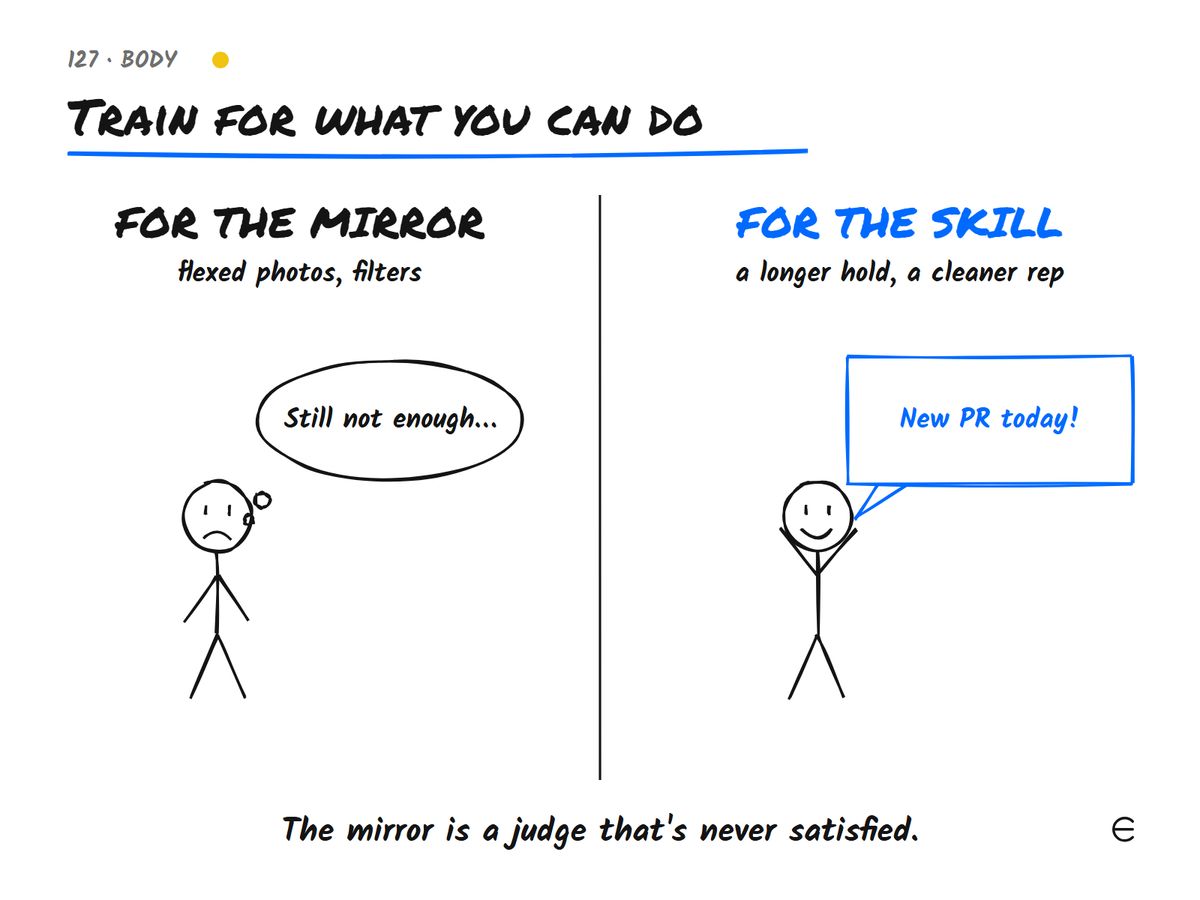
  • Why the muscle doesn't know it's a barbell, and what you trade a number for.
  • Skills want often, muscle wants more: how to program both.
  • Strong enough, not huge.

For the one who wants the planche

If you want the big skills

  • The long skills: the muscle-up, front lever, planche and handstand push-up, rung by rung.
  • The gate, the tendon lag, and why I don't give timelines.
  • When it hurts, and how not to fall four metres to learn it.

Frequently asked questions

Answers about the book, the PDF and refunds.

Buy the book online
Do I need equipment?

A floor and somewhere to hang from: a bar, a park, a sturdy door frame bar. Two chairs help for dips. That's it.

Is it medical advice?

No. It teaches; it doesn't diagnose or treat. If something hurts in a way the book's morning rule says isn't normal, see a doctor or a physio.

What exactly do I get?

A PDF of 236 A5 pages: 41 chapters in three levels, every one graded by the evidence behind it, 22 framework drawings, the first twelve weeks and a log to write in, then the notes with every source. It arrives by email within seconds, on a link tied to your order.

Who wrote it?

I'm Ole. I build Ecosystem HQ, I'm a freestyle calisthenics athlete, and I grade every method I teach by the research behind it: built in the open, corrected in public.

Why is it only €19?

Because the point of a book is that it travels, not that it earns. It's the cheapest way to find out whether I'm worth more of your attention, and it should overdeliver by a visible margin or it hasn't done its job.

There is no discount and there never will be, so nobody who paid full price ever watches it go on sale.

Where are the reviews?

Above, written by readers, and only by readers, with the name each reader chose. Some read a free review copy from Ole; nobody is paid for a review and none is edited. Low ratings go up too.

Until there are some, check the book instead of the praise: the lines above with their page numbers, four real pages, and every source listed at the back.

What if it isn't what I expected?

Reply to the receipt and I'll refund you.

You'll be asked at checkout to confirm you want it delivered immediately, which under EU rules means the 14-day withdrawal right doesn't survive the download. I'll refund you anyway. I'd rather have that than your money.

build strength, skill and a body you're proud of, no gym required, with Bodyweight Is Enough

Build real strength and real skills with your bodyweight: the rules, the ladders, the twelve weeks and the log. Press the button, use what's inside, and see for yourself.

Buy it now · €19

About Ole Wang

The mission: help ambitious young men master themselves, as one system.

Body, mind, the people around you, your craft and what you build: one book for each, every method graded by the evidence behind it, every framework drawn and free in the library.

A freestyle calisthenics athlete and the builder of Ecosystem HQ. Self-published, built in the open, corrected in public. No discounts, no countdowns, no numbers without documents, and no review we wrote.

Get started! Read the books

Five books · 5 areas of life · every chapter graded

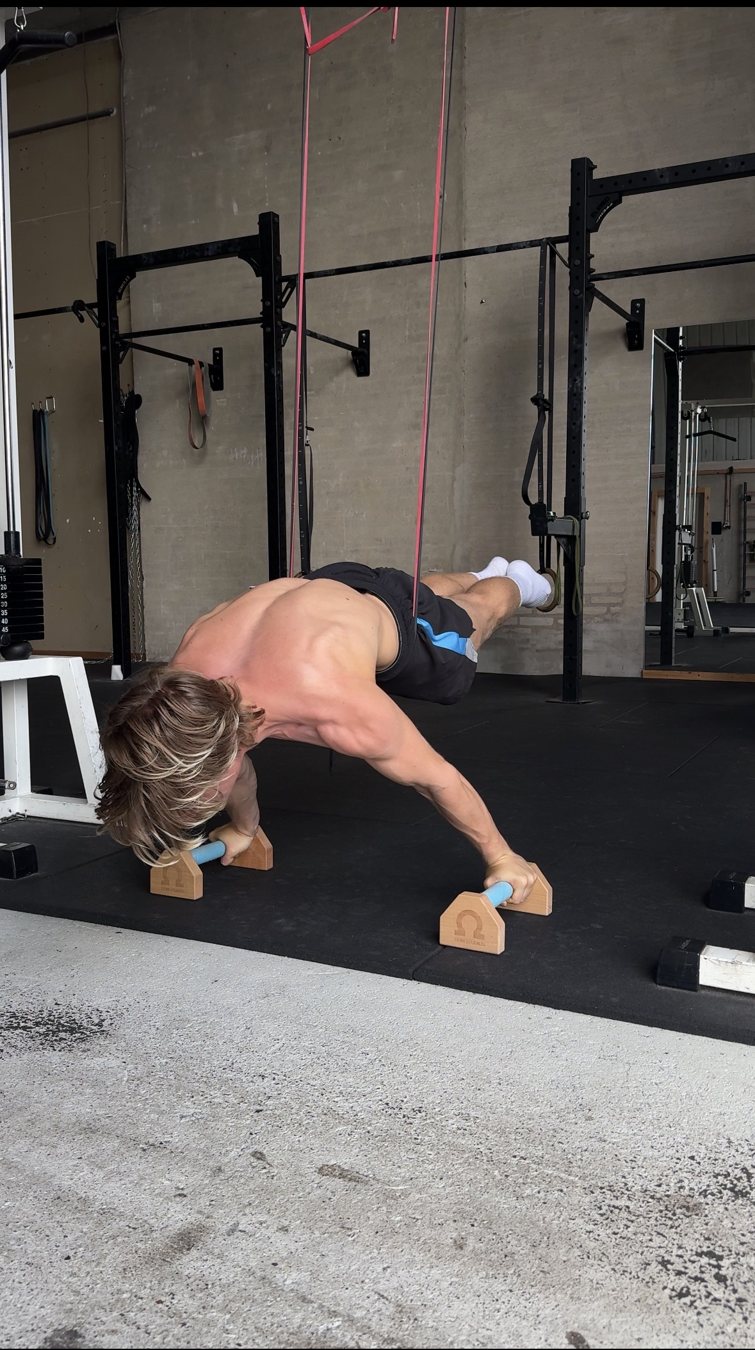
Ole Wang in a full planche on parallettes
THE LIST

New books and free pieces, first.

One email when something ships: a new book, a revision of yours, a new framework worth your time. Nothing else, and unsubscribe from any email.

YOUR REVIEW

What did it change? Or what didn't it?

It goes on the book's page with the name you choose, once Ole has read it. He approves for spam and names, not for opinion: low ratings go up too. Your email is never shown.